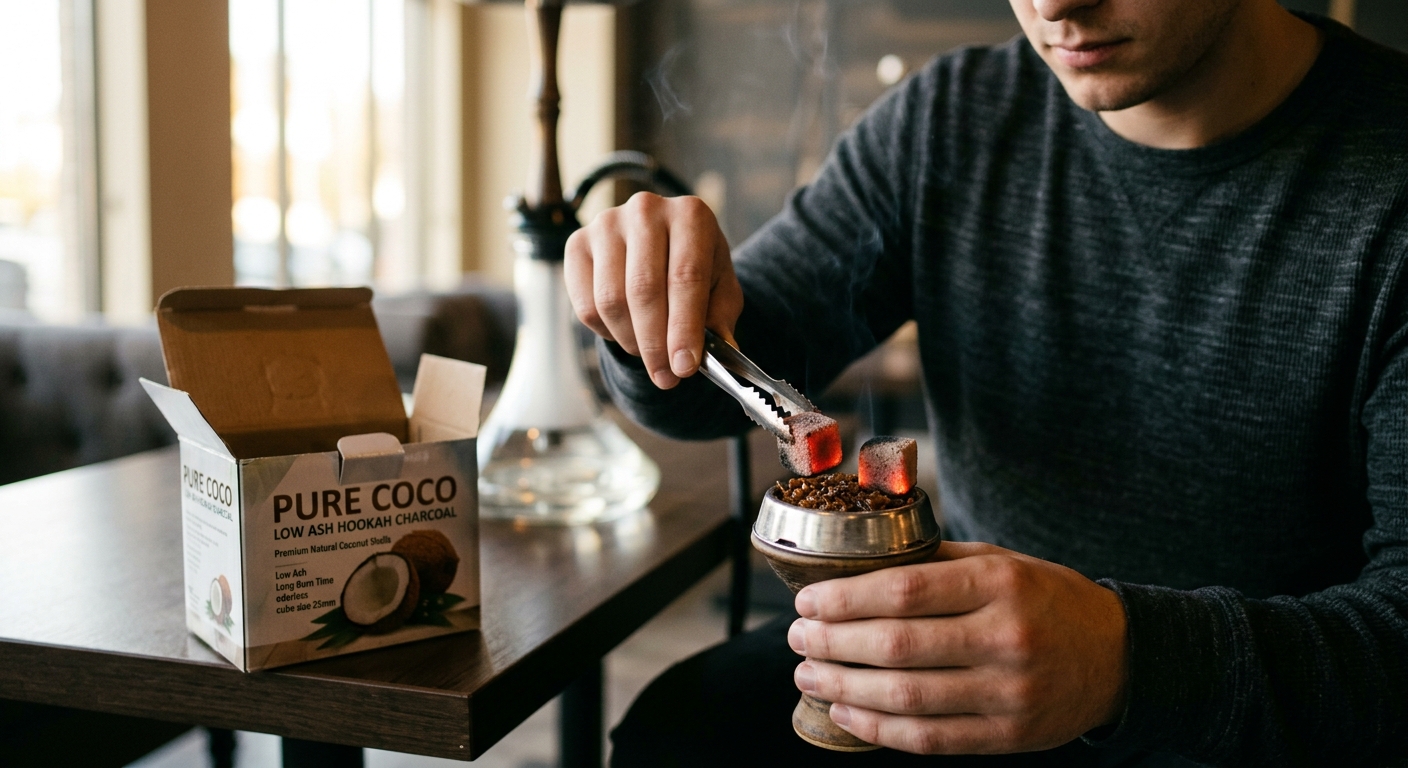
Introduction to Low Ash Hookah Charcoal
For hookah enthusiasts, the quality of the charcoal used is just as critical as the quality of the shisha tobacco itself. The charcoal is the engine of your hookah session, providing the necessary heat to bake the tobacco and produce thick, flavorful clouds. However, not all coals are created equal. One of the most sought-after characteristics in premium hookah coals is a low ash output. The best low ash hookah charcoal ensures a cleaner session, steadier heat management, and an unadulterated flavor profile. In this comprehensive guide, we will explore what makes a charcoal "low ash," why it matters, and which brands currently dominate the market.
Why Ash Content Matters in Hookah Sessions
When charcoal burns, it leaves behind ash as a byproduct. In the context of a hookah bowl, excessive ash can cause several undesirable effects. First, an accumulation of ash acts as an insulator, suffocating the coal and reducing the amount of heat transferred to the shisha. This forces the user to constantly ash the coals and adjust their placement, interrupting the relaxing nature of the session.
Second, excessive ash can fall into the bowl through the foil or heat management device (HMD), mixing with the tobacco. This introduces a harsh, metallic, or burnt taste that completely ruins the carefully crafted flavor profile of your shisha. By utilizing low ash hookah charcoal, smokers minimize these risks, enjoying a more consistent, flavorful, and effortless experience.
The Anatomy of Low Ash Charcoal
The secret to low ash charcoal lies in its raw materials and manufacturing process. The industry standard for premium, low ash performance is 100% natural coconut shell charcoal. Unlike quick-light coals, which are laden with chemical accelerants (such as sulfur or benzene) and wood fillers that produce massive amounts of ash, coconut coals are dense, chemical-free, and burn incredibly efficiently.
Premium manufacturers compress pulverized coconut shells under extreme pressure, removing moisture and impurities. A high-quality low ash charcoal typically boasts an ash content of less than 3%. This means that 97% of the coal is converted into pure, radiant heat, leaving behind only a minimal, powdery residue.
Top Low Ash Hookah Charcoal Brands Compared
To help you choose the right charcoal for your next session, we have compared three of the industry's leading premium coconut charcoal brands. The following table highlights their ash percentages, average burn times, and the primary material used in their construction.
| Brand Name | Ash Content Percentage | Average Burn Time | Primary Material |
|---|---|---|---|
| Cocourth | Under 2.5% | 90 Minutes | 100% Coconut Shell |
| Titanium | Under 3.0% | 75 Minutes | 100% Coconut Shell |
| Charco Flare | Under 2.5% | 80 Minutes | 100% Coconut Shell |
Cocourth: The Industry Standard
Cocourth has rapidly risen to prominence as one of the best low ash hookah charcoal brands available today. Manufactured in Indonesia, these coals are praised for their structural integrity and incredibly low ash output. When burning Cocourth coals, users will notice that the ash remains tightly bound to the cube rather than flaking off into the heat management device or onto the foil. They are free from chemical additives, meaning they emit no foul odors during the lighting process and do not interfere with the shisha's flavor.
Titanium Charcoal: The Enthusiast's Choice
Titanium Charcoal, produced by HookahJohn, is another staple in the premium hookah market. Designed specifically to complement modern heat management devices, Titanium coals burn slightly cooler than some competitors, which is ideal for dark leaf tobaccos that require delicate heat management. Their ash content is remarkably low, and the ash produced is a fine, light powder that is easily tapped away. They offer a reliable, consistent burn that prevents the shisha from scorching.
Charco Flare: The Reliable Alternative
Charco Flare offers an excellent balance of high heat and low ash. These 100% natural coconut coals are known for their precise cuts and uniformity, ensuring that each cube sits perfectly flat on your foil or within your HMD. Charco Flare coals light relatively quickly for natural coals and maintain a solid core throughout the session, reducing the frequency of ashing and rotation required by the user.
Benefits of Using Low Ash Charcoal
- Purer Flavor: With fewer impurities and chemical additives, low ash coals do not impart a charcoal taste to your smoke.
- Easier Heat Management: Less ash means less insulation around the coal. The heat transfer remains consistent, requiring fewer adjustments.
- Cleaner Setup: Minimal ash prevents your heat management device from clogging and keeps your hookah tray looking tidy.
- Longer Sessions: Because these coals are exceptionally dense, they burn slower and longer than high-ash alternatives, often lasting over an hour and a half.
How to Properly Use Natural Low Ash Charcoal
Because low ash coals are exceptionally dense and lack chemical accelerants, they cannot be lit with a standard cigarette lighter. To properly ignite premium coconut charcoal, you will need an electric coil burner or a dedicated hookah charcoal burner.
Place the coals directly onto the electric coils and turn the heat to the highest setting. Allow the coals to sit for approximately 5 to 7 minutes, or until the bottom half is glowing red. Using metal hookah tongs, flip each coal to ignite the remaining side. Wait another 3 to 5 minutes until the coals are completely covered in a thin layer of light gray ash and glowing red throughout. It is crucial to ensure there are no black, unlit spots remaining, as unlit charcoal can produce carbon monoxide and negatively affect the flavor of your session.
Conclusion
Investing in the best low ash hookah charcoal is one of the most effective ways to elevate your smoking experience. By switching from traditional quick-lights or lower-tier natural coals to premium coconut shell brands like Cocourth, Titanium, or Charco Flare, you ensure a cleaner, tastier, and more relaxing session. The minimal ash production leads to superior heat management, allowing the true flavors of your shisha tobacco to shine through without the constant hassle of maintaining the bowl.
Frequently Asked Questions
Why is low ash charcoal better for heat management devices (HMDs)?
Heat management devices, such as the Kaloud Lotus, rely on direct contact with the charcoal to heat the metal plate that sits above the tobacco. Excessive ash acts as a barrier, cooling down the HMD and forcing you to constantly open the vents or add more coal. Low ash charcoal maintains direct heat contact for a much longer period, making HMD use effortless.
Are quick-light coals ever low ash?
No, quick-light coals are inherently high-ash products. They are manufactured with chemical accelerants like sulfur to ignite quickly with a lighter, and they often contain wood dust fillers rather than dense coconut shells. This composition results in a fast burn time and a massive amount of messy, flaky ash.
How should I store my premium coconut hookah charcoal?
To maintain their low ash properties and easy lighting, coconut coals must be kept away from moisture. Store your charcoal in its original inner plastic bag, tightly sealed, or transfer it to an airtight container. Keep the container in a cool, dry place away from direct sunlight or humid environments to prevent the coals from absorbing moisture, which can cause them to crack or go out during a session.
Comments
Post a Comment