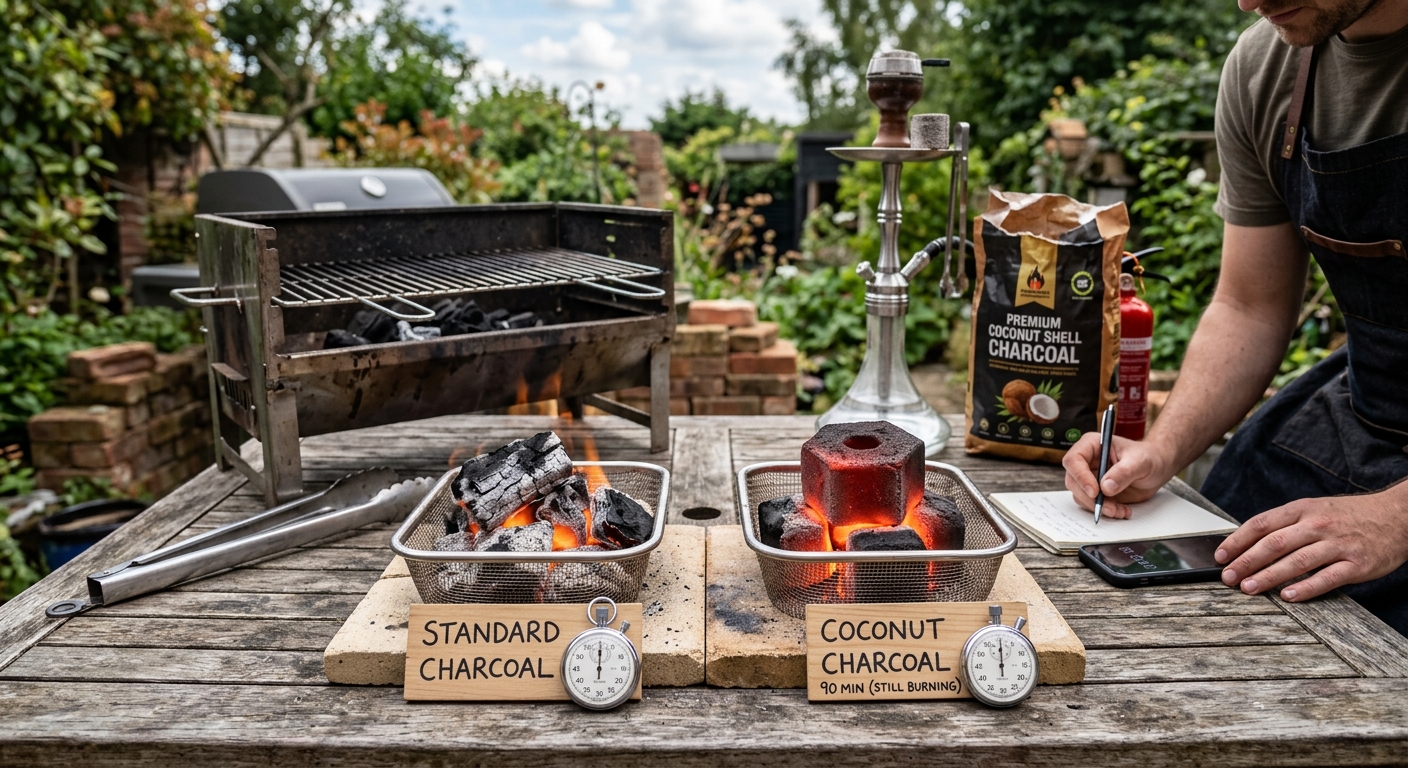
Introduction to Coconut Charcoal
When it comes to grilling, smoking, or enjoying a hookah session, the type of charcoal you choose plays a pivotal role in your overall experience. In recent years, coconut charcoal has surged in popularity among enthusiasts and professionals alike. Made from compressed coconut shells, this eco-friendly alternative offers a cleaner burn, minimal ash production, and most importantly, an extended burn time compared to traditional wood or quick-light charcoal.
Understanding the burn time of your charcoal is essential for planning long barbecues or uninterrupted hookah sessions. A longer burn time means fewer interruptions to add more coals, a more consistent temperature, and ultimately, a better value for your money. In this comprehensive guide, we will delve into a detailed coconut charcoal burn time comparison, exploring how it performs against other popular charcoal types and what factors influence its longevity.
Why Burn Time Matters
Burn time is a critical metric for anyone who regularly uses charcoal. For grilling enthusiasts, a long, steady burn allows for the slow cooking of tough cuts of meat, such as brisket or pork shoulder, without the constant need to replenish the fuel source. It ensures that the temperature remains stable, which is the secret to perfectly smoked barbecue.
For hookah users, burn time is equally important. A premium session requires a consistent, even heat that does not overpower the shisha tobacco. Charcoal that burns out too quickly disrupts the experience, forcing users to pause their session to light new coals. By understanding the burn time of coconut charcoal, you can optimize your setup for maximum enjoyment and efficiency.
Comparing Charcoal Types: Burn Time and Characteristics
To truly appreciate the value of coconut charcoal, it is helpful to compare it directly with other common types of charcoal on the market. The following table provides a clear comparison of coconut charcoal against traditional hardwood lump charcoal and quick-light charcoal, focusing on their burn times, ash production, and ideal uses.
The table below compares the typical performance metrics of three popular charcoal types used for grilling and hookah.
| Charcoal Type | Average Burn Time (Minutes) | Ash Production | Ideal Use Case |
|---|---|---|---|
| Coconut Briquettes | 120 - 150 | Low (Under 5%) | Hookah, Low & Slow Grilling |
| Hardwood Lump | 60 - 90 | Moderate (10-15%) | High-Heat Grilling, Searing |
| Quick-Light | 30 - 45 | High (Over 20%) | Short Hookah Sessions, Travel |
Coconut Charcoal
As seen in the comparison, coconut charcoal boasts an impressive burn time, often lasting between 120 and 150 minutes depending on the size and shape of the briquette. This longevity is due to the high density of the compressed coconut shells. Additionally, it burns incredibly clean, producing less than 5% ash, which makes clean-up a breeze and prevents ash from blowing onto your food or into your hookah bowl.
Hardwood Lump Charcoal
Hardwood lump charcoal is a favorite among barbecue purists for its natural wood flavor and ability to reach very high temperatures quickly. However, because it is less dense and irregular in shape, it burns faster than coconut briquettes. You can expect a burn time of roughly 60 to 90 minutes. While excellent for searing steaks, it requires more maintenance for long smoking sessions.
Quick-Light Charcoal
Quick-light charcoal is convenient because it is coated with a chemical accelerant (like sulfur) that allows it to be lit with a standard lighter. However, this convenience comes at a cost. It burns very quickly, usually lasting only 30 to 45 minutes. Furthermore, it produces a significant amount of ash and can impart a chemical taste to your food or hookah, making it the least desirable option for quality sessions.
Factors That Influence Coconut Charcoal Burn Time
While coconut charcoal generally offers a superior burn time, several variables can affect exactly how long it lasts during a specific session. Being aware of these factors can help you maximize your fuel efficiency.
- Briquette Size and Shape: Larger, thicker briquettes will naturally burn longer than smaller ones. Many brands offer 'cube' or 'flat' shapes for hookah, and larger hexagonal logs for grilling. Cube shapes tend to offer the best balance of surface area and density for a prolonged burn.
- Airflow and Oxygen Supply: Charcoal needs oxygen to burn. If your grill vents are wide open, the increased airflow will cause the charcoal to burn hotter and faster. Restricting the airflow extends the burn time but lowers the temperature. Finding the right balance is key to temperature control.
- Storage Conditions: Charcoal is porous and can absorb moisture from the air. If your coconut charcoal is stored in a damp environment, it will be harder to light, will not burn as hot, and may burn out quicker. Always store charcoal in a cool, dry place, ideally in an airtight container.
- Lighting Method: How you light your charcoal can also impact its overall lifespan. Using a charcoal chimney or an electric burner ensures an even light. If the charcoal is only partially lit when you begin your session, it may burn unevenly and extinguish prematurely.
Tips for Maximizing Your Charcoal Burn Time
To get the absolute most out of your coconut charcoal, consider implementing the following best practices during your next grilling or hookah session.
First, always ensure your coals are fully lit before using them. For hookah, the coals should be glowing red all the way through, with a light coating of grey ash. If any black spots remain, the coal is not fully lit and may cause a harsh taste or uneven burn. For grilling, wait until the coals are covered in a fine layer of white ash before spreading them out.
Second, manage your airflow carefully. If you are smoking a brisket, use the minion method (placing lit coals on top of unlit coals) and keep your air vents mostly closed to maintain a steady, low temperature. For hookah, use a heat management device (HMD) or a wind cover. These tools help trap the heat around the bowl, reducing the rate at which the coals burn away in the open air.
Environmental and Health Benefits
Beyond the practical benefits of a long burn time, coconut charcoal is an environmentally responsible choice. It is made from the discarded shells of coconuts, a renewable resource. No trees are cut down to produce it, unlike traditional hardwood lump charcoal. This makes it a highly sustainable byproduct of the coconut oil and water industries.
Furthermore, because premium coconut charcoal contains no chemical additives or fillers, it burns cleaner. It produces virtually no smoke or foul odors once fully lit, meaning it won't impart unwanted flavors into your food or shisha. This clean burn is not only better for your taste buds but also better for your respiratory health, particularly when used in enclosed spaces like hookah lounges.
Conclusion
In the ultimate coconut charcoal burn time comparison, it is clear that coconut briquettes reign supreme for those seeking longevity, consistency, and a clean burn. Whether you are a pitmaster looking to maintain a steady 225 degrees for a 12-hour brisket smoke, or a hookah aficionado wanting an uninterrupted hour-and-a-half session, coconut charcoal provides the reliability you need. By understanding the factors that affect burn time and employing proper heat management techniques, you can elevate your sessions, save money on fuel, and enjoy a premium, eco-friendly experience.
Frequently Asked Questions (FAQ)
How long does it take to light coconut charcoal?
Because of its high density and lack of chemical accelerants, coconut charcoal takes longer to light than quick-light or lump charcoal. It typically takes between 10 to 15 minutes using an electric coil burner or a charcoal chimney starter to become fully lit and covered in a fine layer of ash.
Can I use coconut charcoal in any type of grill?
Yes, coconut charcoal is highly versatile and can be used in almost any charcoal grill, including Kamado-style cookers, kettle grills, and offset smokers. Its consistent heat and long burn time make it particularly excellent for ceramic Kamado grills.
Does coconut charcoal make food taste like coconut?
No, coconut charcoal does not impart a coconut flavor to your food or hookah tobacco. Because it is carbonized at very high temperatures, all the natural oils and moisture are removed, leaving behind pure carbon that burns with a neutral, clean profile.
Why is my coconut charcoal going out during my hookah session?
If your coals are blacking out, it is usually due to a lack of oxygen or improper lighting. Ensure the coals are fully glowing red before placing them on the bowl. Additionally, make sure your hookah foil or heat management device allows for adequate airflow to the bottom of the coals, and remember to flip them periodically.
Comments
Post a Comment