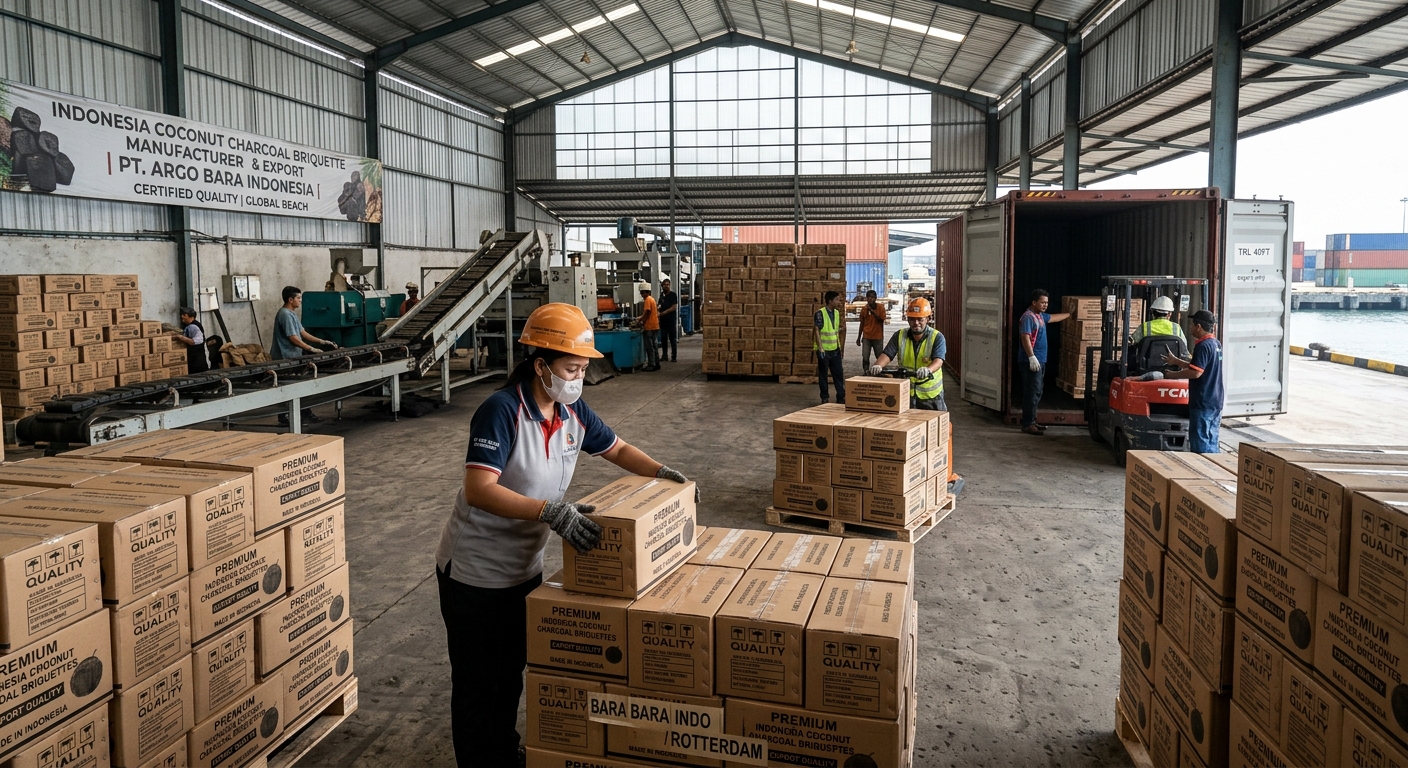
The Rise of Indonesia as a Global Charcoal Briquette Leader
Indonesia has rapidly established itself as the world's leading manufacturer and exporter of premium charcoal briquettes, primarily crafted from high-quality coconut shells. The tropical archipelago provides an abundant supply of raw materials, making it a powerhouse in the sustainable energy and shisha/hookah markets. This article delves into the dynamic landscape of the Indonesia charcoal briquette manufacturer export industry, exploring the reasons behind its global success, the manufacturing process, and what international buyers need to know.
The global demand for high-quality, long-lasting, and eco-friendly charcoal has skyrocketed in recent years. Consumers and businesses alike are shifting away from traditional wood charcoal due to environmental concerns and subpar performance. Indonesian coconut shell charcoal briquettes have emerged as the superior alternative, offering a clean burn, minimal ash, and zero chemical additives.
Why Indonesian Coconut Shell Charcoal is Superior
The secret to the success of Indonesian charcoal exports lies in the raw material: the coconut shell. Unlike wood charcoal, which contributes to deforestation, coconut shell charcoal is a byproduct of the copra and coconut oil industries. This makes it a highly sustainable and environmentally friendly option.
Furthermore, Indonesian coconut shells are renowned for their density and high carbon content. When processed correctly by a skilled manufacturer, these shells yield briquettes that possess exceptional burning characteristics. They burn hotter, last longer, and produce significantly less smoke and ash compared to other types of charcoal. This makes them highly sought after for both culinary applications (like BBQ) and for smoking shisha/hookah, where a clean, tasteless burn is paramount.
Key Advantages of Indonesian Charcoal Briquettes
- High Fixed Carbon Content: Typically ranging from 75% to over 80%, ensuring a long, steady burn.
- Low Ash Production: Premium briquettes leave behind very little ash (often under 2.5%), making cleanup easier and keeping shisha bowls clean.
- Zero Chemical Additives: Reputable manufacturers use 100% natural binders, usually tapioca starch, ensuring no off-flavors or toxic fumes.
- High Heat Output: They generate intense, consistent heat, ideal for grilling and maintaining the temperature of shisha tobacco.
- Eco-Friendly: Made from agricultural waste, preventing deforestation and utilizing renewable resources.
The Manufacturing Process: From Shell to Briquette
The journey from a discarded coconut shell to a premium export-grade briquette involves a meticulous process. Quality control at each step is crucial to ensure the final product meets international standards.
First, the raw coconut shells are collected and carbonized in traditional or modern kilns. This process removes moisture and volatile compounds, leaving behind pure charcoal. The carbonized shells are then crushed and pulverized into a fine powder. This powder is mixed with water and a natural binder (like tapioca starch) to form a dense paste.
The paste is then fed into extrusion or pressing machines, where it is molded into various shapes and sizes—most commonly cubes, flats, or hexagonal logs. Finally, the wet briquettes are carefully dried in large industrial ovens to reduce the moisture content to below 5%. This critical drying phase ensures the briquettes are easy to ignite and will not crack or spark during use.
Exporting from Indonesia: What Buyers Need to Know
Importing charcoal briquettes from Indonesia can be a highly profitable venture, but it requires navigating international logistics, quality control, and regulatory compliance. Finding a reliable Indonesia charcoal briquette manufacturer is the most critical step.
When evaluating potential suppliers, buyers should request comprehensive specifications, including ash content, moisture levels, fixed carbon percentage, and burn time. Reputable manufacturers will readily provide laboratory test reports to verify their claims. Furthermore, buyers must consider packaging options. Charcoal briquettes are typically packaged in inner boxes (for retail) and master cartons, which are then loaded into shipping containers.
The following table compares typical specifications between Standard BBQ Grade and Premium Shisha Grade coconut charcoal briquettes exported from Indonesia.
| Specification | Premium Shisha Grade | Standard BBQ Grade |
|---|---|---|
| Fixed Carbon | > 80% | 70% - 75% |
| Ash Content | < 2.5% | 5% - 8% |
| Burn Time | 90 - 120 minutes | 60 - 90 minutes |
| Moisture Content | < 5% | < 8% |
Logistics and Shipping Considerations
Shipping charcoal briquettes internationally requires careful planning. Charcoal is generally classified as a dangerous good under the IMDG (International Maritime Dangerous Goods) Code, specifically Class 4.2 (Substances liable to spontaneous combustion). However, high-quality coconut shell charcoal briquettes can often be exempted from this classification if they pass the Self-Heating Test (SHT) conducted by a recognized laboratory.
Obtaining an SHT certificate is vital for smooth customs clearance and securing space on commercial shipping vessels. Manufacturers must also provide a Material Safety Data Sheet (MSDS) and ensure that packaging is robust enough to withstand long sea voyages without the briquettes crumbling or absorbing moisture.
Conclusion
The Indonesia charcoal briquette manufacturer export industry offers unparalleled opportunities for global businesses seeking sustainable, high-performance heating and smoking solutions. By leveraging the natural abundance of premium coconut shells and employing rigorous manufacturing processes, Indonesian suppliers dominate the global market. For importers, success relies on partnering with transparent, quality-focused manufacturers and understanding the specific requirements of international shipping and product grading. As the world continues to prioritize eco-friendly and superior alternatives to traditional wood charcoal, Indonesia's position as the premier exporter is set to grow even stronger.
Frequently Asked Questions (FAQ)
Why are Indonesian coconut charcoal briquettes better for shisha?
Indonesian coconut charcoal briquettes are ideal for shisha because they have a very high fixed carbon content and low ash output. This means they burn at a consistent, high temperature for a long time without producing smoke, sparks, or odors that could ruin the flavor of the shisha tobacco.
How do I find a reliable charcoal manufacturer in Indonesia?
To find a reliable manufacturer, look for suppliers who are transparent about their production processes and can provide independent laboratory testing results for their products. It is also beneficial to ask for samples before committing to a large order, and verify their experience with international shipping and required certifications like the Self-Heating Test (SHT).
What is the minimum order quantity (MOQ) for exporting charcoal from Indonesia?
The Minimum Order Quantity (MOQ) usually depends on the manufacturer, but it is standard practice in the industry to require at least one 20-foot container. This typically holds roughly 17 to 18 metric tons of charcoal briquettes, making the shipping costs economically viable for both the buyer and the seller.
Are there different shapes and sizes available?
Yes, manufacturers offer a variety of shapes and sizes to suit different market needs. The most common shapes for shisha are 25mm or 26mm cubes, as well as flat rectangles and circular disks. For BBQ applications, larger hexagonal or cylindrical logs are often preferred.
Comments
Post a Comment