Introduction to Shisha Packing Methods
For hookah enthusiasts, the method of packing shisha tobacco in the bowl is just as crucial as the quality of the tobacco itself. The way you pack your bowl dictates the airflow, the heat distribution, and ultimately, the flavor and longevity of your session. Among the various techniques used by seasoned smokers, the dense pack and the fluff pack are two of the most prominent. Understanding the nuances of dense pack vs fluff pack shisha is essential for anyone looking to perfect their hookah preparation and tailor their smoking experience to specific tobacco brands and styles.
The Fluff Pack: Airflow and Flavor
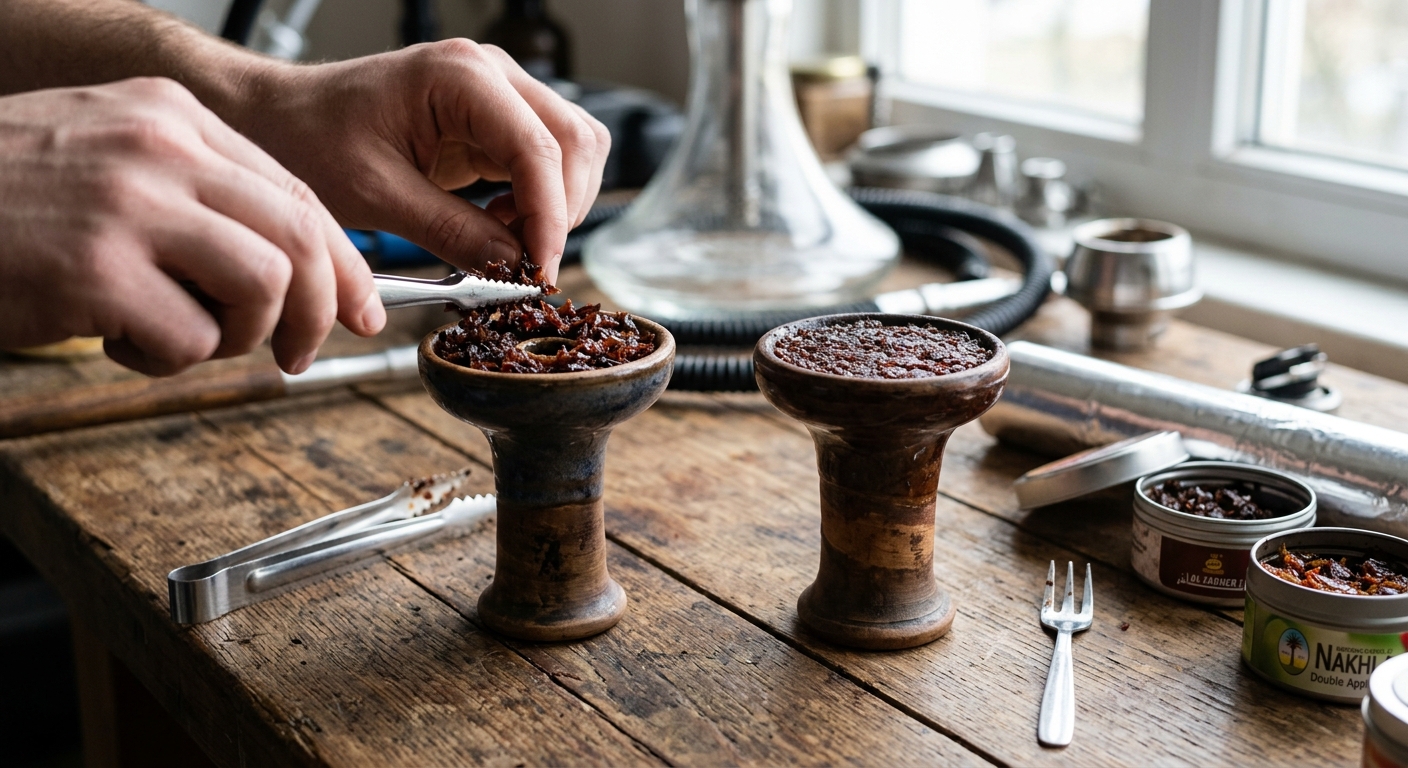
The fluff pack is arguably the most common packing method, especially for beginners. It involves sprinkling the shisha tobacco loosely into the bowl, allowing for maximum airflow between the leaves. This method does not compress the tobacco, which means heat from the charcoal can easily pass through the entire bowl, baking the shisha evenly.
When to Use the Fluff Pack
This technique is highly recommended for modern, blonde leaf tobaccos. Brands that produce heavily dyed or very juicy shisha typically perform best with a fluff pack. Because blonde leaf tobacco has lower nicotine content and is generally more sensitive to heat, the increased airflow prevents the tobacco from scorching too quickly, preserving the delicate flavors.
Pros and Cons of Fluff Packing
- Pros: Excellent airflow, easy to manage heat, ideal for beginners, produces thick clouds quickly.
- Cons: Shorter session duration, can burn quickly if heat is mismanaged, not suitable for dark leaf tobaccos.
The Dense Pack: Longevity and Robustness
In contrast, the dense pack requires compressing the shisha tobacco tightly into the bowl. This method packs significantly more tobacco into the same volume, leaving minimal air pockets. The dense pack fundamentally changes how the tobacco interacts with the heat, requiring a more conductive heating approach rather than convective airflow.
When to Use the Dense Pack
The dense pack is almost exclusively reserved for traditional, dark leaf tobaccos. Dark leaf shisha is unwashed, meaning it retains a high nicotine content and a robust, earthy flavor. Because it is highly heat resistant, compressing the tobacco allows it to slow-bake over a longer period. This method ensures a sustained, rich flavor profile and a much longer smoking session.
Pros and Cons of Dense Packing
- Pros: Exceptionally long sessions, maximizes the robust flavor of dark leaf tobacco, highly resistant to heat spikes.
- Cons: Restricted airflow, requires specific bowl types (like a phunnel bowl), steeper learning curve for heat management.
Comparing the Two Packing Methods
Below is a comparison of the dense pack and fluff pack methods, highlighting their ideal tobacco types, airflow, and typical session lengths.
| Packing Method | Ideal Tobacco Type | Airflow Restriction | Typical Session Length |
|---|---|---|---|
| Fluff Pack | Blonde Leaf (Modern) | Low | 45 - 60 minutes |
| Dense Pack | Dark Leaf (Traditional) | High | 90 - 120 minutes |
Choosing the Right Bowl
Your choice between a dense pack and a fluff pack should also dictate the type of bowl you use. For a fluff pack, an Egyptian clay bowl or a standard phunnel bowl works perfectly, as the loose tobacco allows air to flow naturally. However, for a dense pack, a phunnel bowl is almost mandatory. Because the tobacco is compressed, an Egyptian bowl's bottom holes would get clogged, ruining the airflow. A phunnel bowl features a single central spire, allowing air to pass over the dense tobacco rather than through it.
Conclusion
Mastering the art of packing your hookah bowl is a journey of trial and error. The debate of dense pack vs fluff pack shisha ultimately comes down to the type of tobacco you are smoking and your personal preferences for session length and flavor intensity. By understanding the mechanics behind both methods, you can elevate your hookah experience, ensuring thick clouds, robust flavors, and perfectly managed heat every time you light up.
Frequently Asked Questions (FAQ)
Can I use a dense pack for blonde leaf tobacco?
It is generally not recommended. Blonde leaf tobacco is sensitive to heat and relies on airflow to cook evenly. A dense pack will restrict airflow, causing the blonde leaf to scorch on top while remaining raw underneath, leading to a harsh and unpleasant session.
Why am I not getting big clouds with a fluff pack?
If your fluff pack isn't producing large clouds, you may not be applying enough heat, or you might have under-packed the bowl. Ensure the tobacco is loosely filled slightly below the rim of the bowl and that your coals are fully lit before placing them on the foil or heat management device.
Does the dense pack give you a stronger nicotine buzz?
Yes, primarily because the dense pack is used with dark leaf tobacco, which naturally has a higher nicotine content. Additionally, because you are fitting more tobacco into the bowl, there is a higher concentration of nicotine being vaporized throughout the session.
How do I fix restricted airflow in a dense pack?
If your dense pack is too tight to draw air, use a toothpick or a foil poker to gently poke a few holes through the compressed tobacco down to the bottom of the bowl. This creates small channels for air to pass through without ruining the density of the pack.
Comments
Post a Comment