Introduction to Hookah Charcoal Ash Management
For hookah enthusiasts, managing charcoal ash is a critical component of achieving a smooth, flavorful, and enjoyable smoking session. Excessive ash can lead to a harsh taste, uneven heat distribution, and a messy setup. Understanding why charcoal ashes and how to mitigate it can significantly elevate your hookah experience. This comprehensive guide delves into the mechanisms of charcoal combustion, the types of charcoal available, and actionable strategies for reducing ash in hookah charcoal.
Understanding Why Hookah Charcoal Ashes
When hookah charcoal burns, it undergoes a combustion process that leaves behind a residue known as ash. This ash is primarily composed of minerals that do not burn, such as calcium, potassium, and magnesium. The amount and consistency of the ash depend heavily on the raw materials used and the manufacturing process. Poorly manufactured charcoal with high levels of fillers and impurities will naturally produce more ash than premium, high-density alternatives.
The Role of Raw Materials
The source material of the charcoal dictates its ashing properties. Natural charcoals are typically made from coconut shells, bamboo, or lemon wood, whereas quick-light charcoals often contain chemical accelerants, wood dust, and various binders. Natural coconut shell charcoal is widely regarded as the gold standard for reducing ash, as it burns hotter, longer, and leaves significantly less residue.
Choosing the Right Hookah Charcoal
Selecting the appropriate charcoal is the most effective first step in reducing ash. The market offers a variety of options, but they generally fall into two categories: natural charcoal and quick-light charcoal.
The table below compares the key attributes of popular hookah charcoal types to help you make an informed decision for an optimal smoking experience.
| Charcoal Type | Primary Material | Ash Production Level | Burn Time |
|---|---|---|---|
| Premium Natural | Coconut Shell | Low | 60-90 minutes |
| Standard Natural | Bamboo / Lemon Wood | Medium | 45-60 minutes |
| Quick-Light | Wood Dust & Chemicals | High | 20-40 minutes |
Proper Heating Techniques
How you heat your charcoal plays a vital role in how it ashes during your session. Improperly lit charcoal will not only produce more ash but can also introduce carbon monoxide and unpleasant flavors into your hookah smoke.
Thorough Lighting
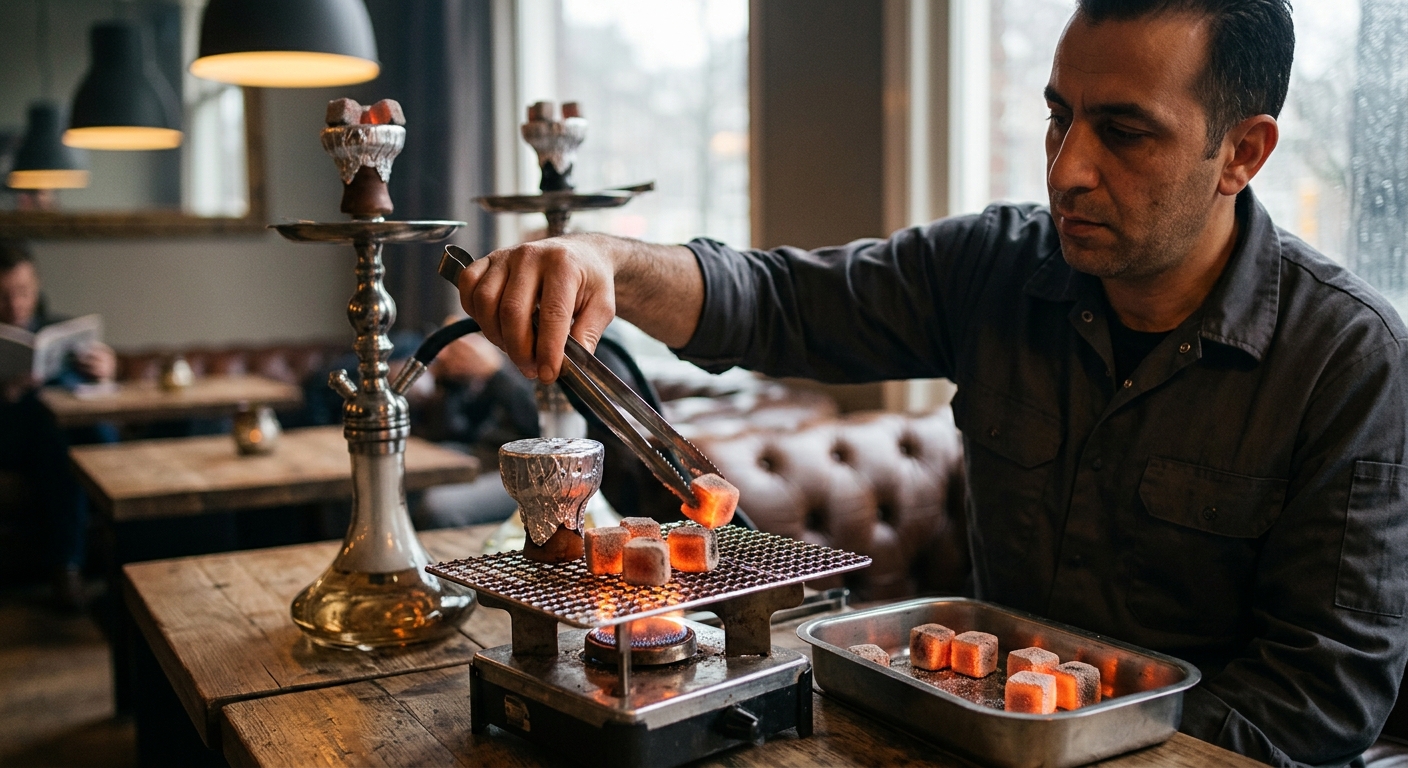
Always ensure your natural charcoal is fully lit before placing it on your hookah bowl. The charcoal should be glowing red on all sides with a thin layer of gray ash covering the surface. If there are any black, unlit spots, the charcoal will burn unevenly, resulting in excessive and loose ash. Using a dedicated electric coil burner is the most efficient and consistent way to light natural hookah charcoal.
Heat Management Devices (HMDs)
Incorporating a Heat Management Device (HMD) is a game-changer for reducing ash contamination. HMDs sit on top of your hookah bowl and house the charcoal, providing a barrier between the ash and your shisha tobacco.
- Even Heat Distribution: HMDs distribute the heat from the charcoal evenly across the shisha, reducing the need to constantly flip or move the coals, which in turn minimizes ash disruption.
- Ash Containment: Most HMDs are designed to keep the ash contained within the device, preventing it from falling through the foil holes into the tobacco, which causes a harsh, burning taste.
- Temperature Control: Adjustable vents on HMDs allow you to control the airflow, ensuring the charcoal burns at an optimal rate rather than combusting too quickly and producing excess ash.
Maintenance During the Session
Even with premium charcoal and an HMD, some ash will inevitably form. How you manage this ash during your session will determine the longevity and quality of your smoke.
Ashing the Coals
Regularly remove excess ash from your charcoal. Use your hookah tongs to gently pick up the coal and drop it lightly into the hookah tray. This process, often referred to as 'ashing,' removes the insulating layer of ash, allowing the coal to breathe and maintain a consistent temperature. Avoid tapping the coals directly over the bowl, as fine ash particles can easily fall into the shisha.
Rotating and Flipping
To ensure even burning, rotate the position of the coals on the bowl or within the HMD every 15-20 minutes. Flipping the coals upside down will expose the unburned surface to oxygen, promoting a cleaner burn and preventing the bottom from dying out and turning to loose ash.
Storage and Environmental Factors
The way you store your hookah charcoal can affect its performance and ash production. Charcoal is highly porous and will absorb moisture from the air if not stored correctly.
Store your charcoal in a cool, dry place, preferably in an airtight container or a heavy-duty ziplock bag. Moisture-compromised charcoal will struggle to light, burn at a lower temperature, and ultimately produce flaky, excessive ash that ruins the session.
Conclusion
Reducing ash in hookah charcoal is essential for a clean, flavorful, and long-lasting smoking session. By investing in high-quality natural coconut charcoal, utilizing a Heat Management Device, ensuring proper lighting techniques, and actively managing the coals during your session, you can drastically minimize ash production. Implementing these professional practices will not only keep your hookah cleaner but also elevate the true flavor profile of your favorite shisha blends.
Frequently Asked Questions
Why does my hookah charcoal turn black and die out?
Charcoal typically turns black and dies out if it was not fully lit to begin with, or if it is not receiving enough oxygen. Make sure the coal is glowing red all over before use, and regularly ash and flip the coals to maintain airflow.
Are quick-light charcoals bad for my hookah session?
Quick-light charcoals contain chemical accelerants that can alter the taste of the shisha and generally produce much more ash than natural charcoals. They also burn much faster. For the best flavor and least amount of ash, natural coconut charcoals are highly recommended.
How often should I ash my hookah coals during a session?
It is generally best practice to gently ash your coals every 15 to 20 minutes. This removes the outer layer of dead ash, allowing the coal to maintain a consistent heat output and preventing ash from dropping into the bowl.
Does moisture affect hookah charcoal ash?
Yes, if charcoal absorbs ambient moisture due to improper storage, it will burn unevenly, produce less heat, and generate a higher volume of flaky ash. Always store charcoal in an airtight container in a dry environment.
Comments
Post a Comment