Understanding the Phunnel Bowl and Heat Management
When it comes to enjoying a premium hookah session, the equipment you choose plays a foundational role in the quality of your smoke. Among the most popular bowl designs in the modern hookah community is the phunnel bowl. Characterized by a single, raised central spire rather than multiple holes at the bottom, the phunnel bowl is designed to keep the shisha juices inside the bowl rather than dripping down into the stem. This design not only prolongs the flavor of your session but also creates a unique airflow dynamic that requires specific heat management strategies. Selecting the best charcoal for a phunnel bowl is critical to unlocking thick clouds, robust flavor, and a smooth experience.
Unlike traditional Egyptian bowls where heat is drawn directly through the tobacco, a phunnel bowl requires the heat to bake the shisha from the top down and the outside in. The air is pulled over the tobacco, down the central spire, and into the water base. Because of this indirect heating method, the charcoal you use must provide consistent, long-lasting, and clean heat. Using inferior charcoal can result in uneven baking, a harsh smoke, or a session that ends prematurely.
Natural Coconut Charcoal vs. Quick-Light Charcoal
Before diving into specific brands, it is essential to establish the undisputed standard for modern hookah smoking: natural coconut charcoal. Quick-light coals, which are coated in chemical accelerants like sulfur or saltpeter to ignite easily with a simple lighter, are universally discouraged for use with phunnel bowls. These chemicals produce an unpleasant odor, interfere with the delicate flavors of your premium shisha, and burn at inconsistent temperatures.
Natural coconut charcoal, on the other hand, is manufactured from compressed coconut shells. It contains no chemical accelerants, requires a dedicated electric coil burner to ignite, and burns significantly hotter, longer, and cleaner than quick-lights. For a phunnel bowl, which often utilizes heat management devices (HMDs) like the Kaloud Lotus or dense foil packing methods, natural coconut charcoal is the only viable option for a professional-grade session.
Key Factors in Choosing Charcoal for a Phunnel Bowl
When evaluating the best charcoal for your phunnel bowl, there are several attributes to consider. First is the shape of the charcoal. Cubes, flats, and cubettes all offer different surface areas and heat outputs. Cubes provide high heat and long burn times, making them ideal for HMDs. Flats offer a slightly lower heat output but greater stability on top of foil. Second is the ash output. High-quality coals produce minimal ash, preventing the vents of your HMD from clogging or ash from falling into the central spire of your phunnel bowl. Finally, burn time is a critical metric; a good natural coal should last at least 60 to 90 minutes without needing replacement.
Top Charcoal Brands for Phunnel Bowls
Below is a comparison of some of the leading natural coconut charcoal brands heavily favored by hookah enthusiasts for use with phunnel bowls. We are comparing the specific shape, the average burn time in minutes, and the manufacturer-reported ash content percentage to help you make an informed decision.
| Charcoal Brand and Product | Shape | Average Burn Time (Minutes) | Ash Content Percentage |
|---|---|---|---|
| CocoUrth Natural Coals | Cube | 90 | 2.0% |
| Titanium Premium Coals | Flat | 65 | 3.0% |
| CharcoFlare Organic Coals | Cubette | 75 | 2.5% |
| CocoBrico Natural Coals | Cube | 80 | 2.5% |
CocoUrth Natural Coals
CocoUrth has rapidly become the gold standard in the hookah community. Their cube coals are particularly well-suited for phunnel bowls paired with a Heat Management Device. Because they produce an exceptionally low amount of ash (approximately 2.0%), they keep the inside of your HMD clean, allowing for unrestricted airflow. The large size of the cubes provides a high, consistent heat output that is capable of thoroughly baking dense packs of dark leaf tobacco, which are commonly used in phunnel bowls. With a burn time of up to 90 minutes, CocoUrth minimizes the need to frequently light new coals, allowing you to relax and enjoy the session.
Titanium Premium Coals
Produced by HookahJohn, Titanium coals are renowned for their consistency and optimal heat output. The flat variation is highly recommended if you prefer using heavy-duty aluminum foil over your phunnel bowl rather than an HMD. The flat shape provides a lower center of gravity, meaning the coals are less likely to roll off the bowl if the hookah is accidentally bumped. While their burn time is slightly shorter than large cubes at roughly 65 minutes, they run at a slightly lower temperature. This makes them perfect for blonde leaf tobaccos that are more heat-sensitive and might burn too quickly under the intense heat of large cube coals.
CharcoFlare Organic Coals
CharcoFlare offers a fantastic middle ground with their cubette shape. Cubettes are smaller than standard cubes but thicker than flats. This allows you to fit three coals comfortably into most standard Heat Management Devices without having to awkwardly balance them on their edges. They provide a steady, manageable heat that is versatile enough for both blonde and dark leaf tobaccos. The 75-minute burn time is highly respectable, and the ash output remains low enough to prevent any airflow restriction over the central spire of the phunnel bowl.
Best Practices for Heat Management on a Phunnel Bowl
Selecting the right charcoal is only half the battle; managing that heat effectively is what guarantees a perfect session. When setting up a phunnel bowl, start by ensuring your natural coals are fully lit. They should be glowing red all the way through, with a thin layer of gray ash covering the exterior. Any black, unlit spots can introduce carbon monoxide and unpleasant tastes into your bowl.
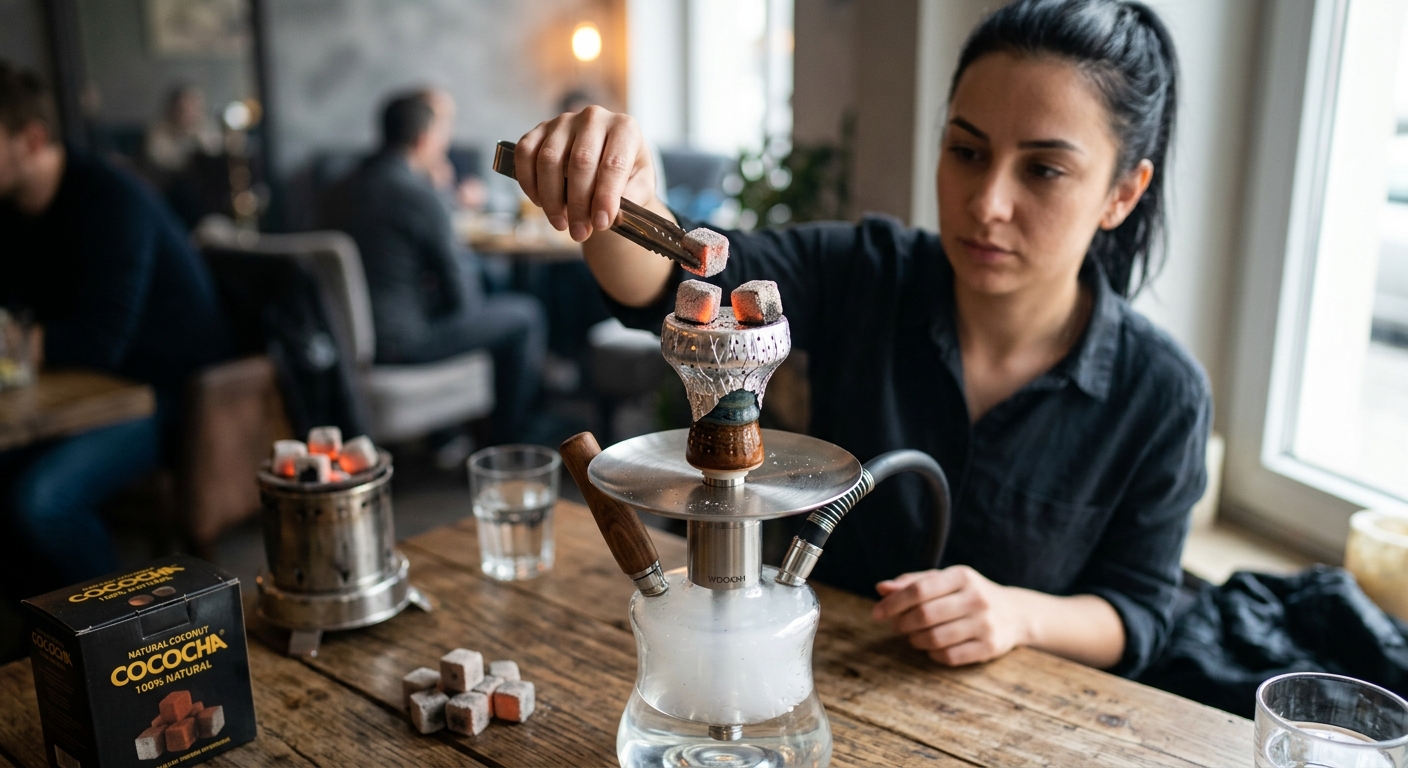
If you are using an HMD, place two to three fully lit cubes or cubettes inside the device and allow it to sit on top of the bowl for about five minutes before taking your first draw. This pre-heating phase allows the bowl itself to warm up, baking the shisha evenly. If the smoke becomes harsh, simply remove the lid of the HMD or take one coal out. If you are using foil, place three flat coals evenly around the outer edge of the bowl, slightly hanging off the rim. Never place a coal directly over the center spire of the phunnel bowl, as this will result in inhaling direct, harsh heat rather than drawing heat through the tobacco.
Conclusion
Optimizing your hookah setup requires attention to detail, and choosing the best charcoal for your phunnel bowl is a vital step in achieving the perfect smoke. Natural coconut coals are the absolute standard, offering clean, odorless, and consistent heat. Whether you choose the long-lasting high heat of CocoUrth cubes for your HMD, the stable and gentle heat of Titanium flats for your foil setup, or the versatile CharcoFlare cubettes, prioritizing high-quality charcoal will dramatically improve your sessions. By understanding the unique airflow of the phunnel bowl and applying proper heat management techniques, you can ensure thick clouds and pristine flavor from the first puff to the last.
Frequently Asked Questions
Can I use quick-light charcoal on a phunnel bowl?
While physically possible, it is highly discouraged. Quick-light coals contain chemical accelerants that taint the flavor of your shisha, burn unevenly, and produce excessive ash that can easily get sucked into the open spire of a phunnel bowl. Always opt for natural coconut charcoal for the best experience.
How many coals should I use on a phunnel bowl?
The number of coals depends on the size of the bowl, the type of tobacco, and whether you are using foil or an HMD. Generally, 2 to 3 natural coconut coals are ideal. Start with 3 coals placed on the outer edge to warm the bowl, and drop down to 2 if the smoke becomes harsh or too hot.
Why does my shisha burn so fast in a phunnel bowl?
If your shisha is burning too quickly, it is likely due to excessive heat or improper packing. Ensure your shisha is packed just below the rim of the bowl so it does not directly touch the foil or HMD. Additionally, try removing one coal or moving the coals further out to the edge of the bowl to lower the temperature.
What is the difference between cube and flat hookah coals?
Cube coals have a larger mass and surface area, providing higher heat and a longer burn time, making them excellent for Heat Management Devices. Flat coals are shorter and wider, offering a slightly lower burning temperature and better stability, which makes them the preferred choice for traditional aluminum foil setups.
Comments
Post a Comment