Introduction to Charcoal Grilling
Mastering the art of charcoal grilling begins with understanding the foundation of the process: the fire. Whether you are a novice griller or an experienced pitmaster, knowing exactly how to tell if charcoal is lit and ready for cooking is crucial for achieving that perfect, smoky flavor and a beautiful sear on your meats. Lighting charcoal can sometimes feel like a waiting game, but understanding the visual and physical cues will ensure you never put your food on the grill too early or too late. In this comprehensive guide, we will explore the precise indicators that your charcoal is perfectly ignited and ready for your culinary creations.
Why Proper Charcoal Ignition Matters
Patience is a virtue, especially when it comes to barbecue. Placing your food on the grill before the charcoal is fully lit can lead to a multitude of problems. First, unlit or partially lit charcoal can impart a harsh, chemical flavor to your food, particularly if you have used lighter fluid. Second, the temperature of the grill will be uneven and unpredictable, making it nearly impossible to cook your food safely and consistently. Fully lit charcoal provides a steady, even, and intense heat that is essential for proper grilling, smoking, and searing. By waiting for the right moment, you ensure a clean burn and a superior tasting meal.
The Visual Cues: What to Look For
The most reliable way to tell if your charcoal is lit is through visual inspection. Charcoal goes through several distinct phases as it ignites and reaches peak cooking temperature. Understanding these phases is key to grilling success.
The Black and Smoking Phase
When you first introduce a flame to your charcoal, whether via a chimney starter, fire starters, or lighter fluid, the coals will remain black and begin to emit a significant amount of thick, white or gray smoke. At this stage, the charcoal is just beginning to catch fire. The smoke is a byproduct of the initial combustion and the burning off of impurities. Do not place your food on the grill during this phase, as the smoke will ruin the flavor of your meat and the heat will be insufficient.
The Red and Glowing Phase
As the fire spreads from the bottom of the pile upward, you will start to see the edges of the coals glowing a vibrant orange or red. The amount of smoke will begin to decrease. This indicates that the core temperature of the charcoal is rising rapidly. While the coals are definitely hot at this point, they are not yet fully lit or ready for cooking. The heat is still uneven, and the unlit portions of the charcoal can still produce undesirable flavors.
The Gray Ash Phase: The Ultimate Indicator
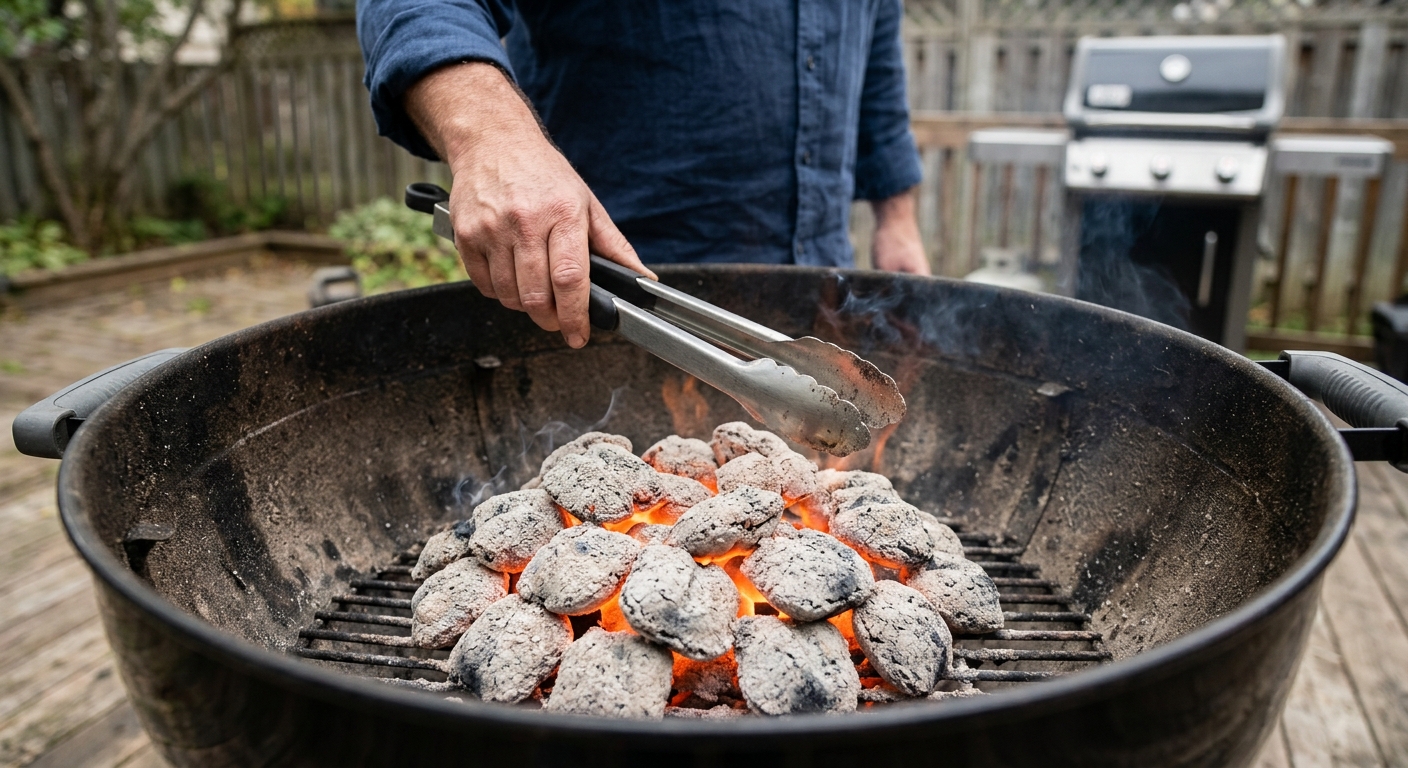
The definitive sign that your charcoal is fully lit and ready for cooking is the appearance of a light gray layer of ash covering the majority of the coals. By this time, the thick smoke should have subsided, replaced by clear heat waves radiating from the pile. In the daylight, the coals will look almost entirely gray, but in the evening or shadows, you will see a deep, steady red glow beneath the ash. When about 80 to 100 percent of the coals are coated in this gray ash, it is time to spread them out and begin grilling.
Temperature Checks: The Hand Test
While visual cues are the primary method for determining if charcoal is lit, you can also gauge the readiness of your grill by testing the temperature. Professionals often use the traditional "hand test" to estimate the heat level. To perform this test, carefully hold your open hand about four to five inches above the cooking grate.
- High Heat (450°F to 550°F): If you can only hold your hand there for 2 to 3 seconds before the heat becomes unbearable, the grill is at high heat, perfect for searing steaks and burgers.
- Medium Heat (350°F to 450°F): If you must pull your hand away after 4 to 5 seconds, you have a medium heat ideal for chicken, pork chops, and vegetables.
- Low Heat (250°F to 350°F): If you can comfortably hold your hand over the grate for 6 to 8 seconds, the grill is at a low heat, suitable for slow cooking and smoking.
Types of Charcoal: Lump vs. Briquettes
The type of charcoal you use will affect how quickly it lights and how long it burns. The two most common types are lump charcoal and charcoal briquettes. Here is a comparison of their characteristics to help you understand their ignition and burning profiles.
| Charcoal Type | Average Ignition Time | Burn Temperature | Burn Duration | Ash Production |
|---|---|---|---|---|
| Hardwood Lump Charcoal | 10 to 15 minutes | Very High (Up to 1000°F) | Short to Medium (1 to 2 hours) | Low |
| Charcoal Briquettes | 20 to 30 minutes | Moderate to High (Up to 700°F) | Long (2 to 4 hours) | High |
Best Methods for Lighting Charcoal
How you light your charcoal can significantly impact how easy it is to tell when it is ready. Using the right tools ensures an even burn and a clean flavor profile.
The Charcoal Chimney Starter
A chimney starter is widely considered the best tool for lighting charcoal. It is a metal cylinder with a grate inside. You place crumpled newspaper or a fire starter block in the bottom chamber and fill the top chamber with charcoal. As the paper burns, the heat is drawn upward through the coals, lighting them quickly and evenly without the need for chemical fluids. You know the charcoal is ready when the coals at the very top of the chimney are covered in gray ash.
Electric Charcoal Starters
Electric starters use a superheated heating element to ignite the coals. You simply bury the metal loop in a pile of charcoal and plug it in. Within minutes, the surrounding coals will begin to glow red. Once a localized fire is established, you remove the starter and let the fire spread naturally until the entire pile is ashy gray.
Lighter Fluid
While commonly used, lighter fluid is generally discouraged by barbecue enthusiasts because it can leave a petroleum-like residue and taste on the food if not burned off completely. If you must use it, apply it sparingly to a pyramid-shaped pile of coals, let it soak in for a minute, and ignite it. You must wait until all the fluid has burned away and the coals are completely covered in gray ash before cooking.
How Long Does the Process Take?
The time it takes for charcoal to become fully lit depends on the method used, the type of charcoal, and environmental factors like wind and humidity. Generally, using a chimney starter with briquettes will take about 20 to 25 minutes. Lump charcoal in a chimney may be ready in as little as 10 to 15 minutes. It is important to factor this preparation time into your cooking schedule so your food is ready exactly when you want it.
Conclusion
Knowing how to tell if charcoal is lit is a fundamental skill for any grilling enthusiast. By observing the visual transition from black and smoky to red and glowing, and finally to a uniform coating of gray ash, you can guarantee your grill is at the optimal temperature for cooking. Combined with the right lighting methods, such as a chimney starter, and an understanding of the differences between lump charcoal and briquettes, you will be well on your way to producing perfectly grilled, delicious meals every time you fire up the barbecue.
Frequently Asked Questions
Can I put food on the grill while the charcoal is still black?
No, you should never place food on the grill when the charcoal is still black. Black charcoal is not fully lit, meaning the temperature will be too low and uneven. Furthermore, the thick smoke produced during this initial ignition phase can give your food an unpleasant, bitter taste.
Why is my charcoal taking so long to light?
Several factors can slow down the ignition process. High humidity, damp charcoal, lack of proper airflow, or using old, degraded briquettes can all hinder the fire. Ensure you store your charcoal in a dry place and arrange the coals in a way that allows oxygen to circulate freely, such as using a chimney starter.
Do I need to leave the grill lid open or closed when lighting charcoal?
You should always leave the grill lid open while you are lighting the charcoal. Fire requires a constant supply of oxygen to grow and spread. Closing the lid will suffocate the flames and cause the coals to extinguish before they are fully lit.
How do I know when to spread the charcoal from a chimney starter?
When using a chimney starter, keep an eye on the top layer of coals. Once the flames are visible peeking through the top and the uppermost coals are covered with a light layer of gray ash, the entire batch is fully lit and ready to be carefully poured into your grill.
Comments
Post a Comment