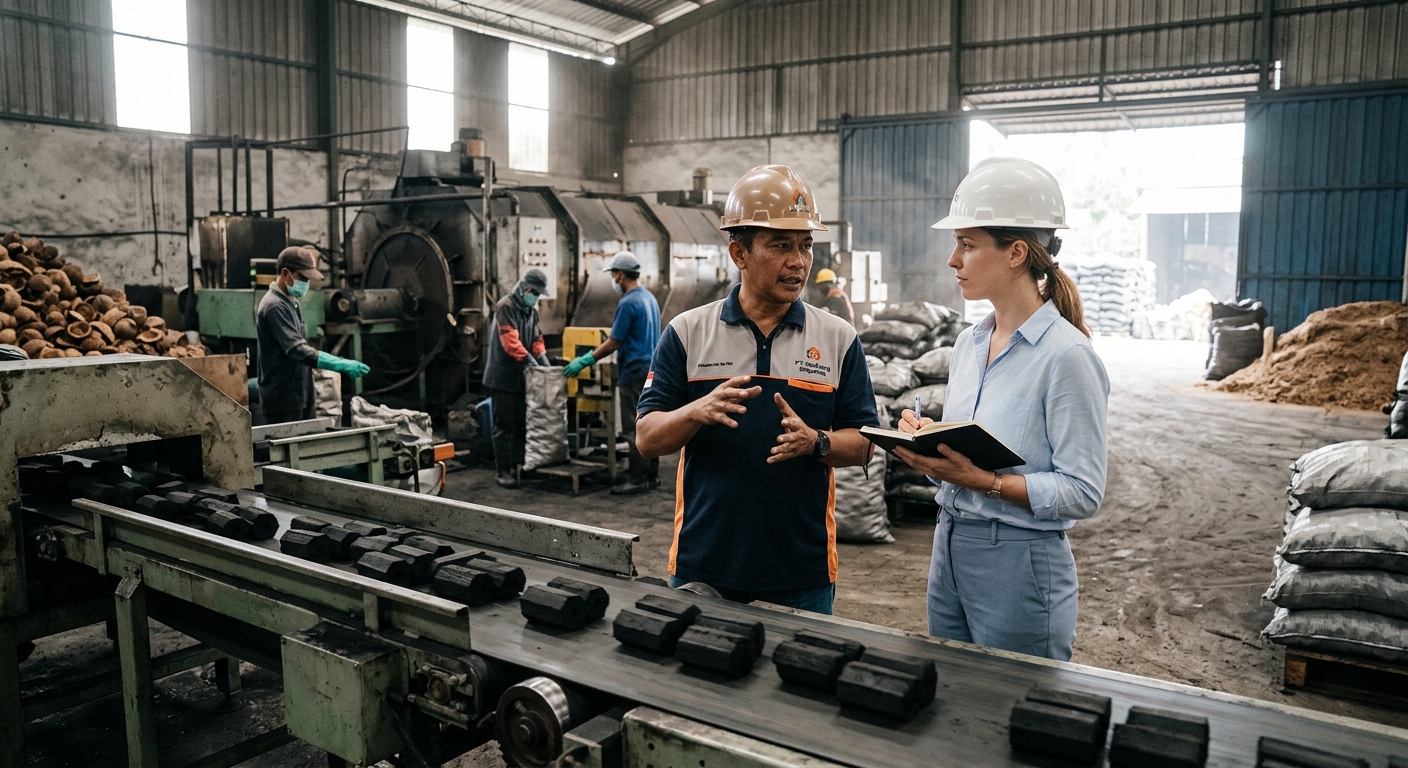
Indonesia has emerged as one of the world's leading producers and exporters of high-quality charcoal briquettes. Driven by abundant natural resources, particularly coconut shells, the nation has established a robust industry that supplies premium charcoal to international markets. Sourcing from a charcoal briquette factory in Indonesia offers businesses a strategic advantage in terms of quality, sustainability, and cost-effectiveness.
The Rise of the Indonesian Charcoal Industry
The Indonesian archipelago is home to vast coconut plantations. Traditionally, coconut shells were considered agricultural waste. However, technological advancements and a growing global demand for sustainable fuel sources have transformed these shells into a valuable commodity. A charcoal briquette factory in Indonesia utilizes this abundant resource to produce briquettes that are highly sought after for both shisha (hookah) smoking and barbecue grilling.
The industry has seen significant growth due to the superior characteristics of Indonesian coconut charcoal. Unlike traditional wood charcoal, coconut shell briquettes burn hotter, last longer, and produce minimal ash and smoke. This makes them the preferred choice for consumers seeking a clean and efficient fuel source.
Manufacturing Process at a Charcoal Briquette Factory in Indonesia
The production of high-quality charcoal briquettes is a meticulous process that requires strict quality control at every stage. Here is a breakdown of the typical manufacturing process in a professional Indonesian factory:
1. Raw Material Sourcing and Selection
The foundation of a premium briquette is the raw material. Factories source mature coconut shells from local farmers. The shells must be completely dry and free from impurities. The quality of the raw shell directly impacts the carbon content and ash level of the final product.
2. Carbonization
The selected coconut shells undergo carbonization, a process where they are burned in a low-oxygen environment. This converts the shells into raw charcoal. Modern factories use controlled kilns to ensure an even burn and maximize the carbon yield while minimizing environmental impact.
3. Crushing and Grinding
Once carbonized, the charcoal is crushed and ground into a fine powder. The consistency of this powder is crucial for the density and structural integrity of the final briquette. Factories utilize industrial crushers and sieves to achieve the precise particle size required.
4. Mixing and Binding
The charcoal powder is then mixed with a natural binder, typically tapioca starch, and water. This step ensures that the briquette holds its shape during burning. A reputable charcoal briquette factory in Indonesia will use purely natural binders, avoiding any chemical additives that could affect the flavor of food or shisha.
5. Molding and Extrusion
The mixture is fed into molding machines or extruders. Depending on the target market, the briquettes can be shaped into cubes, cylinders, hexagons, or fingers. The pressure applied during this stage determines the density of the briquette, which affects its burning time.
6. Drying and Packaging
The freshly molded briquettes contain high moisture levels and must be dried. They are placed in large industrial ovens for 24 to 48 hours until the moisture content drops below 5%. After drying, the briquettes undergo a final quality inspection before being packaged into custom-branded boxes and master cartons for export.
Comparing Indonesian Charcoal Types
Indonesian factories produce different grades of charcoal briquettes tailored for specific uses. The table below compares the primary specifications of Shisha (Hookah) briquettes and BBQ briquettes produced in Indonesia.
| Briquette Type | Primary Material | Ash Content | Burn Time | Max Temperature |
|---|---|---|---|---|
| Shisha / Hookah | 100% Coconut Shell | Under 2.5% | 90-120 Minutes | 500°C |
| Barbecue (BBQ) | Hardwood / Hardwood Blend | 4.0% - 6.0% | 240-300 Minutes | 400°C |
Why Source from Indonesia?
Partnering with a charcoal briquette factory in Indonesia provides several distinct advantages for international wholesalers and distributors.
- Exceptional Quality: Indonesian coconut charcoal is globally recognized for its high fixed carbon content, low ash residue, and absence of sparks and odors.
- Sustainable Practices: By utilizing coconut shells, the industry promotes agricultural recycling and prevents deforestation associated with traditional hardwood charcoal production.
- Customization (OEM): Most factories offer Original Equipment Manufacturer (OEM) services, allowing buyers to customize the shape, size, and packaging to align with their brand identity.
- Cost Efficiency: The proximity to raw materials and competitive manufacturing costs enable Indonesian factories to offer favorable pricing without compromising on quality.
Quality Control and Certifications
To succeed in the international market, a reliable charcoal briquette factory in Indonesia adheres to stringent quality control standards. Reputable manufacturers frequently test their products in independent laboratories to verify specifications such as moisture content, volatile matter, ash content, and fixed carbon.
Furthermore, established factories hold certifications necessary for international shipping and trade. Since charcoal is considered a dangerous good (self-heating substance) by shipping lines, factories must possess an MSDS (Material Safety Data Sheet) and a Self-Heating Test certificate (SHT) from an independent surveyor to ensure safe transportation.
Conclusion
The charcoal briquette industry in Indonesia is a testament to the successful marriage of abundant natural resources and advanced manufacturing techniques. A professional charcoal briquette factory in Indonesia is capable of supplying premium, eco-friendly fuel that meets the exacting standards of the global market. Whether for shisha lounges in the Middle East or barbecue enthusiasts in Europe, Indonesian charcoal briquettes offer unmatched performance, sustainability, and value. By understanding the production process and establishing relationships with reputable manufacturers, global buyers can secure a reliable supply of top-tier charcoal products.
Frequently Asked Questions (FAQ)
What is the minimum order quantity (MOQ) when buying from a charcoal briquette factory in Indonesia?
The standard MOQ for most factories is one 20-foot container, which holds approximately 18 to 19 metric tons of charcoal briquettes, depending on the packaging and palletizing requirements.
How long does it take for an Indonesian factory to produce and ship an order?
Production lead times typically range from 2 to 4 weeks for a standard container order. This timeline includes raw material preparation, molding, drying, and custom packaging. Shipping times vary based on the destination port.
Are chemical additives used in Indonesian coconut charcoal briquettes?
Reputable factories in Indonesia do not use chemical additives. The briquettes are made from 100% natural coconut shell charcoal and a natural food-grade binder, usually tapioca starch, ensuring a clean burn with no off-tastes or odors.
Can I request custom shapes and packaging for my brand?
Yes, the vast majority of Indonesian charcoal briquette factories offer OEM services. Buyers can specify the exact dimensions, shapes (such as 25mm cubes or hexagonal logs), and provide custom designs for the inner boxes and master cartons.
Comments
Post a Comment