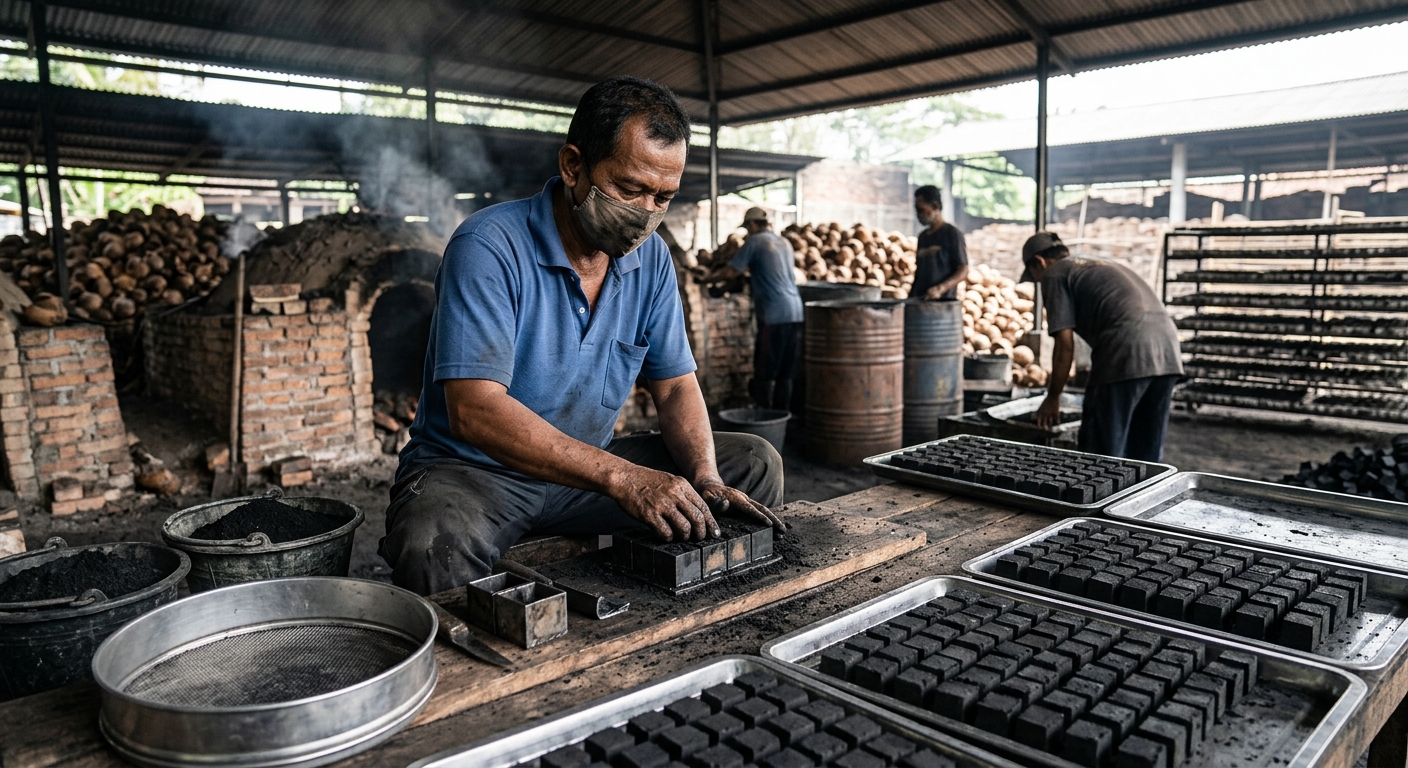
Introduction to Shisha Charcoal Production
The demand for high-quality shisha charcoal has grown exponentially in recent years, driven by the global popularity of hookah smoking. Unlike regular charcoal used for grilling, shisha charcoal requires specific characteristics to ensure a premium smoking experience. It must be smokeless, odorless, long-lasting, and produce minimal ash. Achieving these qualities requires a meticulous and highly controlled manufacturing process. In this comprehensive guide, we will explore the step-by-step shisha charcoal production process, shedding light on how raw materials are transformed into the perfect hookah briquettes.
Raw Material Selection and Preparation
The foundation of premium shisha charcoal lies in the raw materials used. The most sought-after material for high-end hookah charcoal is coconut shell. Coconut shells are preferred because they yield high carbon content, low ash, and burn without emitting unwanted odors or smoke that could ruin the flavor of the shisha tobacco.
Sourcing Coconut Shells
Manufacturers typically source mature coconut shells from tropical regions. It is crucial that the shells are thoroughly cleaned and free from coconut meat, fibers, and dirt, as these impurities can negatively affect the final product's burning characteristics.
Drying the Raw Material
Before any processing begins, the raw coconut shells must be dried. Moisture content must be reduced significantly to ensure an efficient carbonization process. This is usually achieved by sun-drying the shells for several days or using industrial dryers if the climate is uncooperative.
The Carbonization Process
Carbonization is arguably the most critical step in the shisha charcoal production process. This is where the dried coconut shells are converted into charcoal by heating them in the absence of oxygen.
How Carbonization Works
The shells are loaded into a carbonization furnace or kiln and heated to temperatures ranging from 500°C to 800°C. Because oxygen is restricted, the shells do not burn to ash; instead, volatile compounds such as water, methane, and tar are driven off, leaving behind carbon-rich charcoal.
Cooling and Discharging
Once the carbonization is complete, the charcoal must be cooled gradually. If exposed to oxygen while still hot, the charcoal could spontaneously combust. The cooled coconut shell charcoal is then discharged and prepared for the next stage of production.
Crushing and Milling
The raw charcoal pieces resulting from carbonization are too large and irregular to be used for shisha. They must be reduced to a fine powder to allow for uniform shaping and burning.
- Crushing: The large charcoal pieces are first fed into a crusher, which breaks them down into smaller granules.
- Milling: The granules are then transferred to a milling machine (often a Raymond mill or ball mill), which grinds them into an ultra-fine carbon powder. The finer the powder, the smoother and denser the final briquette will be.
Mixing with Binders
Charcoal powder alone cannot hold a shape. To create the familiar cube or cylindrical briquettes, the powder must be mixed with a binder. The choice of binder is vital, as it must be 100% natural and food-grade to ensure no toxic fumes or foul tastes are produced during smoking.
Natural Binders
The most commonly used binder in high-quality shisha charcoal is tapioca starch or cassava starch. The starch is mixed with water to create a paste, which is then thoroughly blended with the fine charcoal powder in an industrial mixer. The goal is to coat every particle of charcoal with the binder, creating a homogeneous, dough-like mixture.
Briquetting: Shaping the Charcoal
Once the mixture reaches the right consistency, it is ready to be shaped. The briquetting machine applies immense pressure to the charcoal mixture, extruding it or pressing it into molds.
Common Shisha Charcoal Shapes
- Cubes: The most popular shape, typically measuring 25mm x 25mm x 25mm. They offer great stability and a long burning time.
- Flats: Rectangular briquettes that are slightly thinner, favored for shorter smoking sessions.
- Fingers/Cylinders: Cylindrical shapes that are often used in traditional Middle Eastern setups.
Drying the Briquettes
Freshly pressed briquettes contain a significant amount of moisture from the binder paste. If packaged immediately, they would mold or fail to light. Therefore, a rigorous drying process is necessary.
Industrial Drying
The briquettes are placed on trays and loaded into a drying room or continuous mesh belt dryer. The temperature is strictly controlled, usually between 80°C and 100°C, to slowly evaporate the moisture without cracking the briquettes. The final moisture content must be brought down to below 5% to ensure quick ignition and consistent burning.
Here is a comparison of the two main types of raw materials used in charcoal production to highlight why coconut shells are heavily favored for shisha:
| Raw Material | Ash Content | Burn Time | Odor Impact |
|---|---|---|---|
| Coconut Shell | Under 3% | 90 - 120 minutes | Odorless |
| Hardwood | 5% - 8% | 45 - 60 minutes | Mild Wood Scent |
Quality Control and Packaging
Before the shisha charcoal reaches the consumer, it must pass stringent quality control checks. Manufacturers test random samples for ignition time, burning duration, ash color, and drop-test durability (to ensure they don't break during transit).
Packaging
Once approved, the charcoal is packaged. Premium shisha charcoal is usually sealed in inner plastic liners to protect it from ambient humidity, then placed into beautifully designed cardboard boxes. Proper packaging is essential to maintain the product's integrity from the factory to the hookah lounge or living room.
Conclusion
The shisha charcoal production process is a complex journey that requires precision engineering, strict quality control, and a deep understanding of natural materials. By transforming humble coconut shells into high-performance carbon briquettes, manufacturers provide hookah enthusiasts with a clean, odorless, and long-lasting heat source. Understanding this process highlights the true value of premium shisha charcoal and why investing in high-quality products drastically improves the overall smoking experience.
Frequently Asked Questions (FAQ)
Why is coconut shell used for shisha charcoal?
Coconut shell is used because it has a very high carbon density, which results in a longer burning time. Additionally, it produces minimal ash, is entirely smokeless, and does not emit any odors that would interfere with the flavor of the shisha tobacco.
Are chemical binders used in shisha charcoal production?
High-quality shisha charcoal brands strictly avoid chemical binders. They use natural, food-grade binders like tapioca or cassava starch to ensure the charcoal is safe to use and does not produce toxic fumes when heated.
How long does the entire production process take?
The process can take several days from start to finish. Drying the raw coconut shells and carbonizing them takes a few days, while crushing, mixing, briquetting, and the final drying of the shaped charcoal usually takes an additional 24 to 48 hours depending on the drying technology used.
Why does shisha charcoal need to be dried after shaping?
During the mixing stage, water is added to the natural binder (starch) to create a paste that holds the charcoal powder together. If this moisture is not completely dried out of the final briquette, the charcoal will be very difficult to light, will not burn evenly, and may develop mold during storage.
Comments
Post a Comment