Introduction to Hookah Charcoal Dynamics
For hookah enthusiasts and lounge professionals alike, the pursuit of the perfect shisha session is a never-ending journey. While much attention is rightfully given to the quality of the shisha tobacco, the bowl design, and the hookah pipe itself, one of the most critical elements often goes overlooked: the charcoal. The type, quality, and notably the shape of the charcoal you use fundamentally dictates the thermodynamics of your session. Today, the market is dominated by natural coconut charcoal, but within that category, a significant debate continues: cube vs hexagonal hookah charcoal. Understanding the nuances of these two distinct shapes will empower you to optimize your heat management, maximize your flavor output, and extend the longevity of your smoking experience.
Understanding Cube Hookah Charcoal
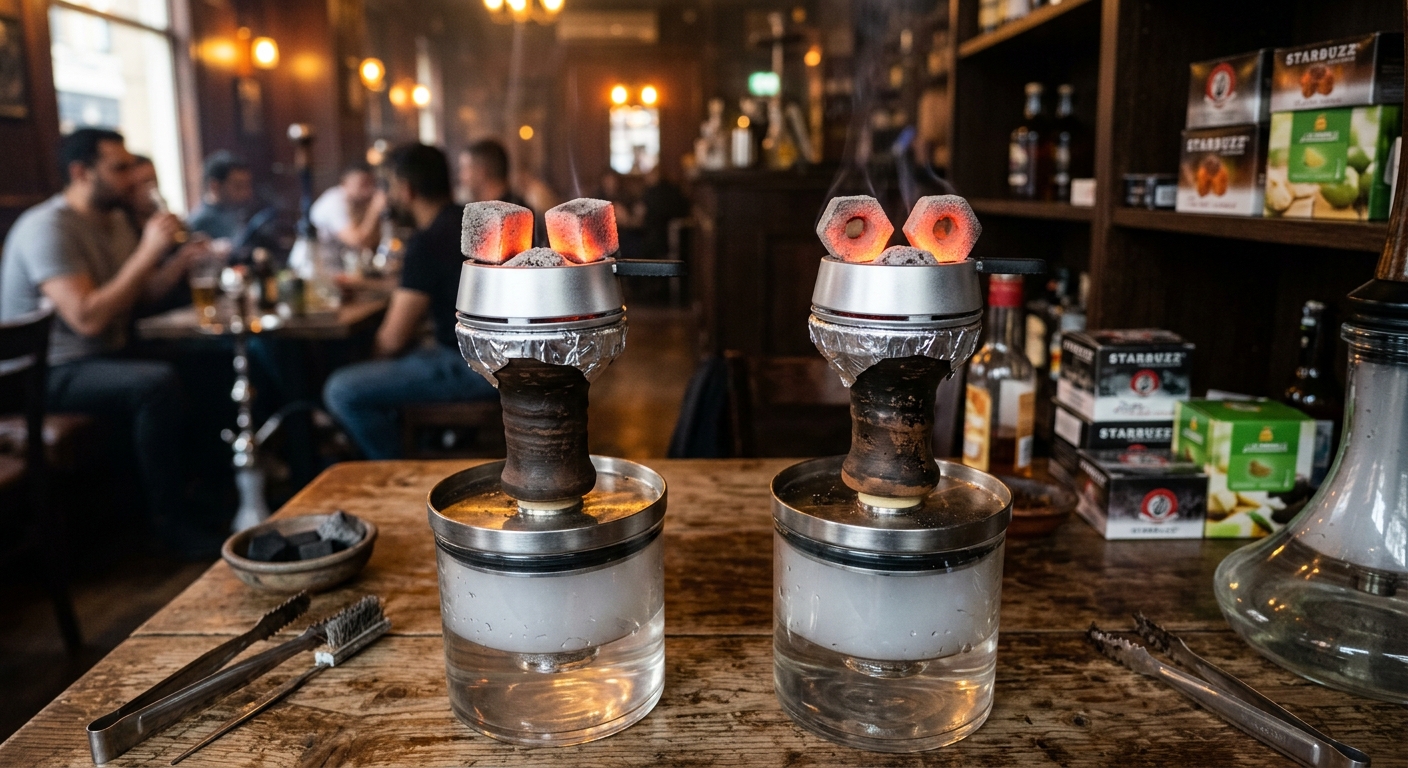
Cube hookah charcoal is arguably the industry standard for modern shisha smoking. As the name suggests, these coals are shaped into perfect or near-perfect cubes, typically measuring 25mm by 25mm by 25mm (often referred to as '25s'), though 22mm ('flats' or 'cubettes') and 26mm variations also exist. They are manufactured by compressing natural coconut husks under immense pressure, resulting in a dense, uniform block of combustible material.
The Advantages of Cube Charcoal
The primary advantage of cube charcoal lies in its density and surface area. Because of its geometric volume, a cube holds a substantial amount of thermal energy. This translates to an incredibly long burn time, often lasting between 60 to 90 minutes depending on your ambient environment and draw frequency. Furthermore, the flat sides of a cube provide unmatched stability. When placed atop a foil-wrapped bowl or inside a Heat Management Device (HMD) like a Kaloud Lotus, cubes sit perfectly flat. This prevents them from rolling off the bowl, reducing the risk of carpet burns and ensuring a steady, consistent transfer of heat directly downwards into the tobacco.
The Drawbacks of Cube Charcoal
Despite their popularity, cubes are not without their flaws. Because they sit completely flat on their bottom surface, the side resting on the foil or HMD can sometimes 'black out' due to a lack of oxygen. This requires the user to periodically ash and flip the coals to maintain optimal heat. Additionally, their large size and high heat output can sometimes be too aggressive for delicate blonde leaf tobaccos or shallower bowls, requiring a steeper learning curve in heat management to avoid scorching the shisha.
Understanding Hexagonal Hookah Charcoal
Hexagonal hookah charcoal, often colloquially referred to as 'hex' coals, features a six-sided cylindrical shape. They are typically slightly longer than cubes, resembling a small, thick pencil or a chopped piece of a hexagonal rod. Like premium cubes, the best hexagonal coals are also made from compressed coconut shell carbon, ensuring a clean, tasteless, and odorless burn that does not interfere with your shisha flavor.
The Advantages of Hexagonal Charcoal
The unique geometry of hexagonal charcoal provides distinct thermodynamic benefits, primarily centered around airflow. Because the coal rests on one of its narrow, elongated rectangular faces, the total surface area making direct contact with the foil or HMD is less than that of a cube. This lesser contact area, combined with the angled sides, allows for significantly better oxygen circulation around the coal. Consequently, hexagonal coals are far less prone to blacking out on the bottom. They burn incredibly evenly and generally produce less ash volume per minute than their cubic counterparts. Furthermore, because the heat is distributed along a longer, narrower footprint, hex coals are excellent for precisely dialing in the heat on the outer rim of a traditional phunnel bowl.
The Drawbacks of Hexagonal Charcoal
The main drawback of hexagonal charcoal is its stability. The shape makes them slightly more prone to rolling if the hookah is bumped, which can be a hazard. Additionally, due to their slightly lower overall density compared to a massive 26mm cube, they may not last quite as long, typically capping out around the 45 to 60-minute mark before requiring replacement. They also tend to fit awkwardly in some modern, strictly circular Heat Management Devices, making them more suited for traditional foil setups.
Detailed Comparison: Cube vs Hexagonal
To truly understand which charcoal is right for your setup, it is essential to compare them across several critical performance metrics. Below is a comprehensive breakdown of how cube and hexagonal charcoals stack up against each other.
| Feature | Cube Charcoal | Hexagonal Charcoal |
|---|---|---|
| Burn Time | 60 - 90 Minutes (High) | 45 - 60 Minutes (Moderate) |
| Heat Output | Very High / Aggressive | Moderate / Consistent |
| Stability | Excellent (Flat surface prevents rolling) | Fair (Can roll if bumped) |
| Oxygen Flow | Poor on bottom (Prone to blacking out) | Excellent (Rarely blacks out) |
| HMD Compatibility | Perfectly suited for most modern HMDs | Can be awkward in circular HMDs |
| Foil Compatibility | Great, but requires frequent flipping | Exceptional for rim-placement |
How to Choose the Right Charcoal for Your Setup
Choosing between cube and hexagonal hookah charcoal ultimately comes down to your personal smoking style, your equipment, and the type of tobacco you prefer to smoke. There is no universally superior option, only the right tool for a specific job.
When to Choose Cube Charcoal: You should opt for cube charcoal if you are using a Heat Management Device (HMD). The deep, circular wells of most HMDs are designed explicitly with cubes in mind. Cubes are also the better choice if you are smoking dark leaf tobacco, which typically requires a higher, more sustained heat to release its full flavor profile and nicotine content. If you value long, uninterrupted sessions and do not mind occasionally flipping your coals, cubes are the undisputed champions of longevity.
When to Choose Hexagonal Charcoal: Hexagonal charcoal shines when used with a traditional aluminum foil setup, particularly on larger bowls. Because you can arrange them along the very edge of the bowl, they provide a gentle, even bake to the tobacco without shocking it with too much direct thermal radiation. If you smoke heat-sensitive blonde leaf tobaccos that scorch easily under cubes, the milder, well-ventilated heat of a hexagonal coal will preserve your flavor. They are also ideal for smokers who prefer a hands-off approach, as their superior airflow means you rarely have to ash or flip them to keep them glowing red hot.
Conclusion
The debate between cube vs hexagonal hookah charcoal highlights the depth and customization available within modern hookah culture. Cubes offer brute-force thermal energy, exceptional stability, and seamless integration with modern heat management devices, making them the go-to for long sessions and dark leaf tobaccos. Hexagonal coals, conversely, offer finesse. Their superior airflow prevents blackouts, provides a gentler heat profile perfect for blonde leaf tobaccos, and excels on traditional foil setups. By understanding the thermodynamic properties of each shape, you can tailor your heat management strategy to match your bowl, your tobacco, and your personal preferences, ensuring every session is flavorful, smooth, and perfectly cooked.
Frequently Asked Questions (FAQ)
Are coconut coals better than quick-light coals?
Yes, absolutely. Natural coconut coals, whether cube or hexagonal, contain no chemical accelerants. They burn hotter, last much longer, and most importantly, do not impart a foul, chemical taste into your shisha smoke, which is a common issue with quick-light charcoals.
Can I break a cube coal to mimic a smaller shape?
While you can carefully split a glowing cube coal using hookah tongs, it is not recommended as it creates inconsistent heat and excessive ash. If you find standard cubes too hot, it is better to purchase smaller 'flat' (cubette) coals or switch to a hexagonal shape for a milder heat profile.
How do I stop my cube coals from blacking out on the bottom?
To prevent cubes from blacking out, ensure your charcoal is fully lit (glowing red on all sides) before placing it on the bowl. You can also use a charcoal tray with raised ridges inside your HMD, or simply flip the coals every 15-20 minutes to expose the unoxygenated bottom side to the air.
Which charcoal produces more ash?
Generally, both premium cube and hexagonal coals produce a low amount of ash (usually under 3% of their total volume). However, because cubes burn longer and have more total mass, they will leave behind a slightly larger pile of ash by the end of a two-hour session compared to hexagonal coals.
Comments
Post a Comment