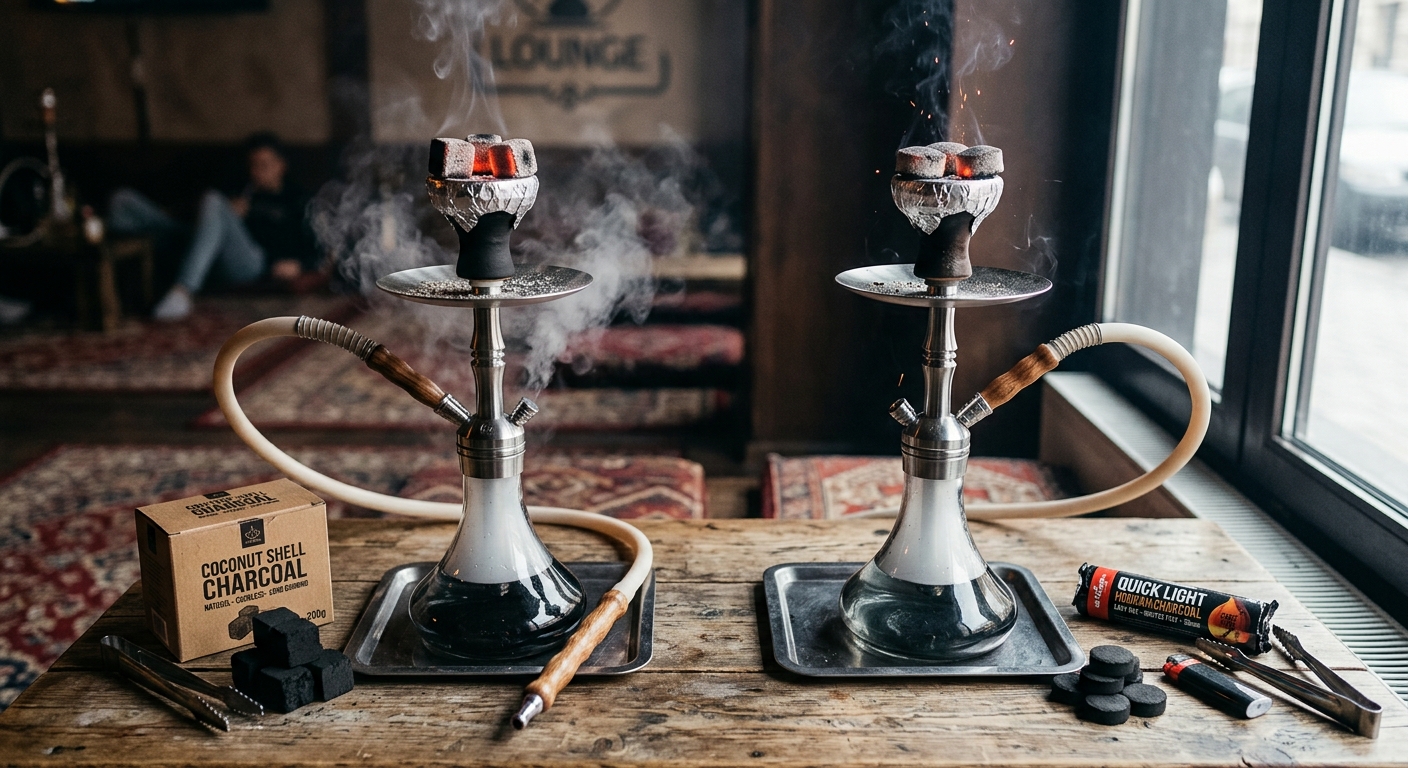
Introduction to Hookah Charcoal
When it comes to enjoying a premium hookah or shisha session, the quality of your charcoal plays a pivotal role. The charcoal is the engine that drives the entire experience, heating the shisha tobacco to produce the thick, flavorful clouds enthusiasts crave. However, not all coals are created equal. In the world of hookah, two main contenders dominate the market: coconut charcoal and quick light charcoal. Understanding the differences in their composition, performance, and overall impact on your session is essential for any discerning smoker. In this comprehensive guide, we will explore the great debate of coconut vs quick light charcoal, helping you make an informed decision for your next session.
Understanding Quick Light Charcoal
Quick light charcoal, as the name suggests, is designed for maximum convenience and speed. These coals are typically shaped into discs or pucks and are infused with a chemical accelerant, such as benzene or sulfur. This chemical additive allows the charcoal to ignite almost instantly when exposed to an open flame, such as a standard pocket lighter or a match.
Pros of Quick Light Charcoal
- Unmatched Convenience: The primary advantage of quick lights is their ease of use. You do not need a dedicated burner to light them, making them ideal for outdoor sessions, travel, or situations where you lack access to electricity.
- Speed: A quick light coal can be fully lit and ready to use in under a minute, significantly reducing the setup time for your hookah session.
Cons of Quick Light Charcoal
- Flavor Interference: The chemical accelerants used to ignite these coals often emit a distinct, somewhat acrid odor and flavor. This can severely mask or alter the delicate taste of premium shisha tobacco.
- Shorter Burn Time: Quick light coals burn at a lower temperature and consume themselves much faster than natural alternatives. Expect a single coal to last roughly 30 to 45 minutes before needing a replacement.
- High Ash Production: These coals tend to produce a significant amount of fine ash, which can easily find its way into your hookah bowl and negatively affect the smoking experience.
- Health and Safety Concerns: The inhalation of residual accelerant fumes is a concern for many health-conscious users, as these chemicals can cause headaches or throat irritation in poorly ventilated spaces.
Understanding Coconut Charcoal
Coconut charcoal represents the premium standard in the hookah community. These coals are natural, manufactured from compressed coconut shells that are carbonized and formed into cubes or flats. Unlike quick lights, coconut coals contain no chemical accelerants. They rely entirely on their dense, organic composition to provide a clean and consistent heat source.
Pros of Coconut Charcoal
- Clean and Pure Flavor: Because they lack chemical additives, coconut coals are virtually odorless and tasteless. This ensures that you experience the unadulterated flavor of your shisha tobacco exactly as the manufacturer intended.
- Extended Burn Time: The high density of compressed coconut shells allows these coals to burn significantly longer and hotter. A standard coconut cube can easily last between 60 to 90 minutes, meaning fewer coal changes during a session.
- Low Ash Output: Coconut charcoal produces minimal ash, keeping your bowl cleaner and ensuring consistent airflow and heat distribution.
- Eco-Friendly: Utilizing coconut shells, a byproduct of the coconut industry, means these coals are highly sustainable. No trees are cut down to produce them, making them a much greener choice.
Cons of Coconut Charcoal
- Requires Equipment to Light: You cannot light coconut charcoal with a standard cigarette lighter. They require a sustained, high-heat source, such as an electric coil burner or a gas stove, for about 5 to 10 minutes to become fully lit.
- Less Portable: Because they require a dedicated heat source, coconut coals are less convenient for impromptu outdoor sessions far from electrical outlets.
Head-to-Head Comparison
To help visualize the differences between these two popular options, we have compiled a direct comparison of their key characteristics.
| Feature | Coconut Charcoal | Quick Light Charcoal |
|---|---|---|
| Lighting Time | 5 - 10 minutes (requires burner) | 30 - 60 seconds (requires lighter) |
| Burn Time | 60 - 90 minutes | 30 - 45 minutes |
| Flavor Impact | None (Odorless/Tasteless) | High (Chemical taste/smell) |
| Ash Production | Low (Holds shape well) | High (Crumbly) |
| Eco-Friendliness | High (Sustainable byproduct) | Low (Contains chemical additives) |
| Best Use Case | Home sessions, premium lounges | Travel, outdoor emergencies |
Health and Environmental Considerations
In today's conscientious society, both health and environmental factors play a significant role in consumer choices. Quick light charcoal relies on chemical ignition agents. When lit indoors without proper ventilation, these accelerants can release carbon monoxide and sulfur dioxide at faster rates initially, which is why many users report headaches when using them. Conversely, coconut charcoal offers a much cleaner burn, producing fewer unwanted volatile compounds.
Environmentally, the clear winner is coconut charcoal. The production of coconut coals utilizes discarded coconut husks. This repurposes waste material and prevents deforestation, as no timber is required. Quick light coals, often made from wood dust bound with synthetic chemicals, do not offer the same level of environmental stewardship.
Making the Right Choice for Your Session
Choosing between coconut and quick light charcoal ultimately comes down to your priorities and setting. If you are an aficionado who values the pure taste of artisan shisha, invests in high-quality bowls, and smokes primarily at home, coconut charcoal is the undisputed choice. The superior heat management, longevity, and lack of chemical interference make the extra lighting time well worth the effort.
On the other hand, if you are planning a beach trip, a camping excursion, or simply want a quick, hassle-free session without the need for an electric coil burner, quick light coals serve a practical purpose. They are the emergency backup of the hookah world—not ideal for everyday use, but highly convenient in a pinch.
Conclusion
In the debate of coconut vs quick light charcoal, the consensus among professional hookah lounges and seasoned enthusiasts heavily favors coconut charcoal. Its natural composition, prolonged burn time, and neutral flavor profile provide a vastly superior smoking experience. While quick light charcoal holds a specific niche for travel and convenience, it falls short in delivering the quality and purity required for a truly exceptional session. By investing a few extra minutes in lighting natural coconut coals, you are guaranteeing a cleaner, longer, and much more flavorful hookah experience.
Frequently Asked Questions
Can I light coconut charcoal with a regular lighter?
No, a standard pocket lighter does not produce sustained heat across a wide enough surface area to ignite coconut charcoal. You must use an electric single-coil burner, a dedicated hookah charcoal heater, or a gas stove.
Why does quick light charcoal give me a headache?
Headaches from quick light coals are typically caused by the chemical accelerants, such as benzene, used to make them ignite quickly. Inhaling these fumes, especially in an unventilated room, can lead to mild carbon monoxide exposure and chemical sensitivities.
How do I know when my coconut charcoal is fully lit?
Coconut charcoal is fully lit when the entire cube has turned glowing red and is covered in a very thin layer of gray ash. There should be no black, unlit spots remaining, which usually takes about 5 to 10 minutes on a high-heat burner, flipping them halfway through.
Does coconut charcoal taste like coconuts?
No, coconut charcoal does not taste or smell like coconuts. The carbonization process removes all organic flavor compounds, leaving behind pure carbon that burns completely odorless and tasteless, ensuring your shisha flavor remains pure.
Comments
Post a Comment